

Classification and Working Mechanism of Extracorporeal Blood Processing

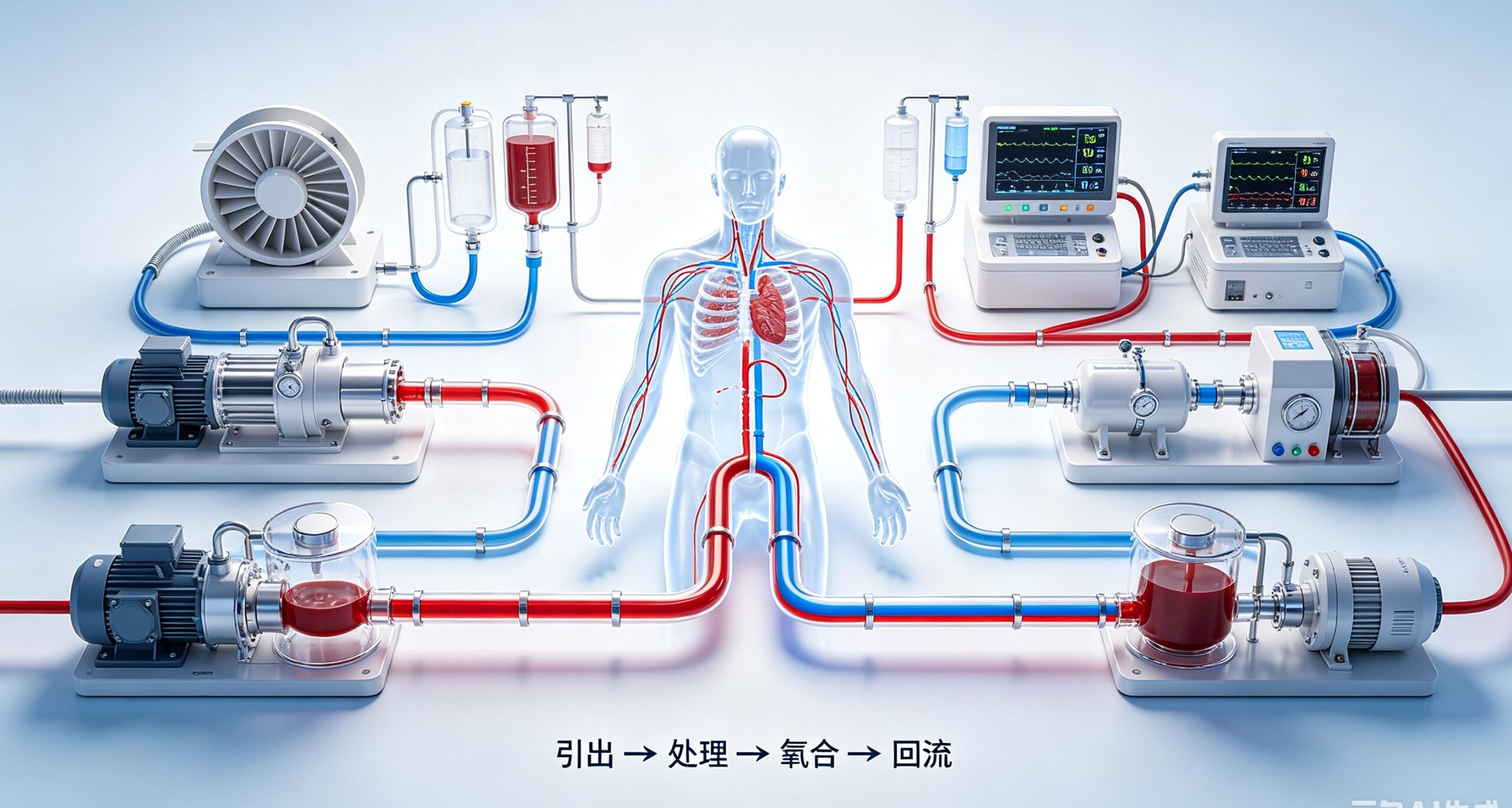
Extracorporeal Blood: Definition, Mechanism and Clinical Application Extracorporeal blood is referred to as blood that is temporarily brought outside the human body. The term is generally used to explain the process where specialized apparatus is involved in purifying the blood, oxygenating it, adjusting its circulation and separating blood components. Generally, it refers to the medical technology that has made progress over the years. The working principle of this technology is very straightforward and efficient. The blood from the body is drawn through medical catheters and sterile tubes and then transported to the appropriate apparatus for the physiological processing. Following that, with the aid of the special pump, blood is returned into the blood circulation. Thus, this method is used to replace or assist the impaired functions of the cardiopulmonary system. Extracorporeal blood processing is classified into two major types, i.e. CPB and ECMO. CPB is also referred to as heart-lung machine circulation and it is mainly used in open-heart surgeries including other large surgeries in which a patient’s heart has to be stopped. ECMO; which is known as extracorporeal membrane oxygenation, is used for heart and lung failure patients where their respiratory and cardiac systems fail completely. Besides, this method involves the use of special machines for blood processing.