
Mechanism and Clinical Application of UBI Blood Ultraviolet Irradiation Therapy

The following information summarizes the use of UBI (Ultra-violet Blood Irradiation) as a new clinical treatment based on its action mechanism, indications, safety, and available data:. 1. A brief description of what UBI is and its technical description
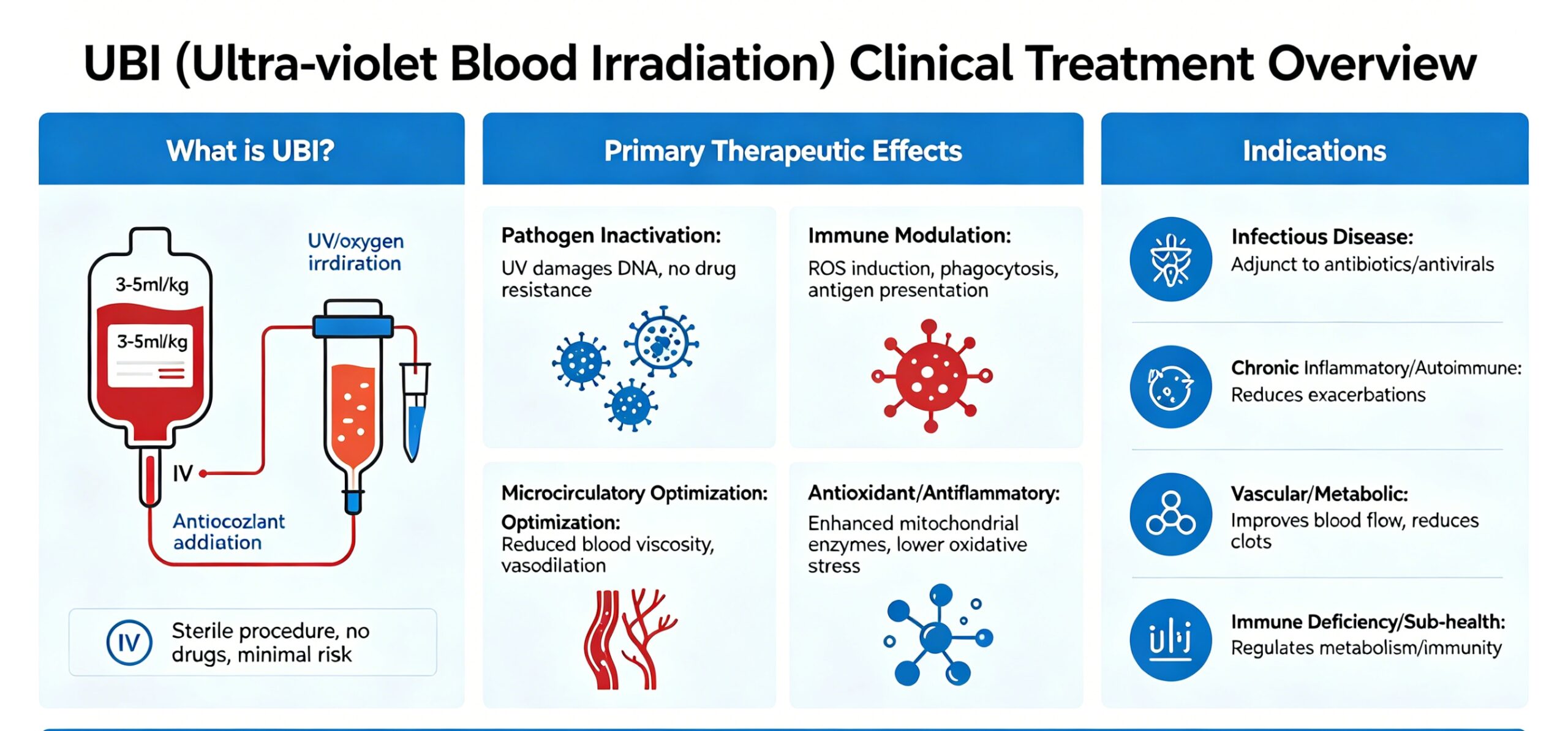
UBI is a type of phototherapy that was developed first by Knott in the United States in 1928 to treat many conditions. UBI mimics the effects of surface phototherapy but is performed on isolated portions of the blood stream. Specifically, UBI utilizes ultraviolet (UV) light to produce biochemical and immunological activity systemically in the body; therefore, when UV energy is used with exact doses delivered via specific equipment; and added to the isolated blood under sterile conditions, the biochemical and immunological actions of the patient’s total body will occur. Normal procedure for the collection of blood for UBI therapy is to collect 3 to 5 ml of venous blood for each kilogram of the patient’s weight, then add an anticoagulant and irradiated the blood with a predetermined amount of UV and oxygen before reinfusing the blood back into the patient via an intravenous route using calibrated equipment, and all performed without drugs and with minimal risk of injury to the patient. The primary therapeutic effect of UBI
The clinical efficacy of UBI is based on the cumulative photobiological effects achieved by UBI, which produces a dominant synergistic photobiological action achieved by UBI, which includes eliminating of pathogens, managing the immune system, and enhancing the microenvironment, with the mechanisms of action will be discussed below.Pathogen Inactivation/Antimicrobial Effect (removing pathogens from the bloodstream)
Targeted ultraviolet light (UVL) damages the DNA of the pathogen causing the infection in the bloodstream (bacteria, viruses, parasites). This damages the pathogen so that it cannot reproduce, and pathogens are inactivated (also see “broad-spectrum immunosuppressive,” below). While antibiotics create drug resistance in bacteria, UBI does not; therefore, it has unique value for treating drug-resistant and untreatable viral infections.
Immune System Modulation
UBI induces moderate levels of reactive oxygen species (ROS) in the patient’s body and stimulates phagocytosis (eating and digesting) of the pathogen by immune cells, as well as antigen presentation (presenting the pathogen’s antigen to the immune system) by immune cells. These three mechanisms work together to modulate inflammatory cytokine production, thereby balancing acute and chronic inflammatory responses, thereby supporting the re-establishment of immune system homeostasis.
Microcirculatory Optimization
UBI reduces blood lipid peroxide levels, which lowers blood viscosity, decreases red blood cell aggregation, and increases blood fluidity. UBI also stimulates the formation of nitric oxide in the bloodstream, which dilates peripheral blood vessels and increases oxygen delivery to tissues, thereby resolving the stasis and hypoxia that occur in microcirAntioxidants and anti-inflammatory properties
UBI Standard Treatment results in enhanced functionality of natural mitochondrial antioxidant enzymes; thus lowering global oxidative stress levels, inhibiting chain reactions that generate pro-inflammatory chemical mediators, and thereby decreasing the degree of chronic low-grade inflammation due to global oxidative stress and in turn decreasing the degree of oxidative injury to tissues themselves.
Indications for the use of UBI
The UBI physical therapy treatment has been shown through scientific evidence to safely complement many clinical applications. The following is a list of the primary indications of UBI Therapy.
Infectious Disease
UBI can be a useful adjunct to antibiotic and/or antiviral therapies in treating many acute and/or chronic infectious processes including acute respiratory viral diseases and urosepsis by reducing the average time to recovery from infection; decreasing the amount of medication/toxicity needed to treat an infected person; and decreasing the number of patients who develop a refractory infection.
Chronic inflammatory/autoimmune diseases
UBI will help with many chronic inflammatory and autoimmune diseases such as chronic bronchitis and rheumatoid arthritis by reducing the frequency and severity of exacerbations through the modulation of the immune system and the reduction in infiltration of inflammatory cells.
Vascular/Metabolic disorders
UBI has been shown to improve is haemorrhagic cerebrovascular disorders, hyperlipidaemia, and hyperviscosity from poor circulation by improving blood flow, decreasing the formation of clots within the blood vessels, and by reducing the effects of ischemia and hypoxia on tissues.
Immune deficiency and/or sub-health conditions
UBI regulates metabolic/immune functions in patients suffering from a sub-health condition as a result of chronic stress, lack of relief from fatigue, dysfunctional immune system response, and chronic insomnia.
Operational Safety Standards: The use of sterile procedures in conjunction with individually calculable parameters (pooled UV wavelength, exposure time