
Extracorporeal Blood Oxygenation and Ozonation

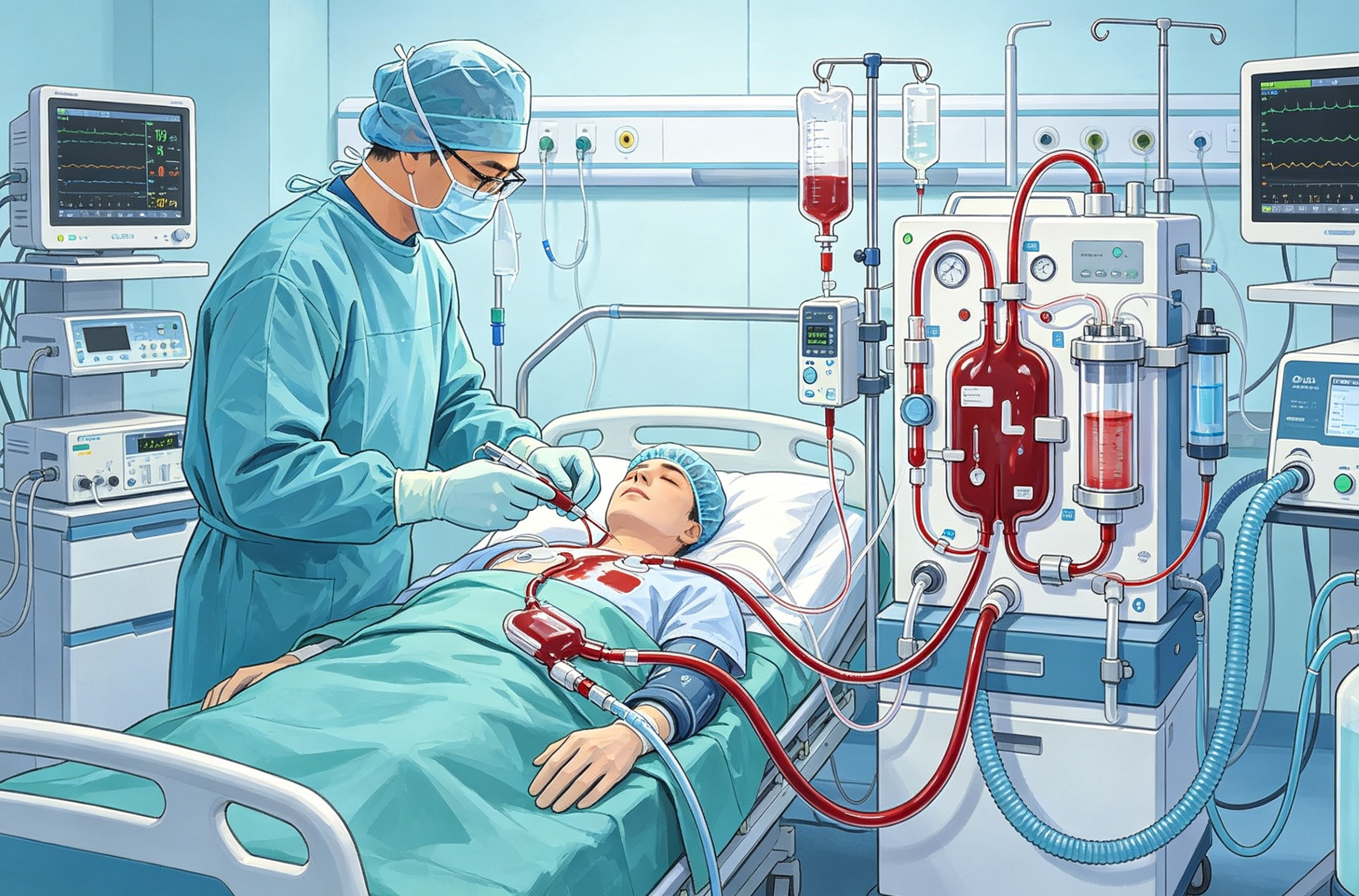
Extracorporeal Blood Oxygenation and Ozonation is an innovative technique within the domain of integrative and regenerative medicine as a new (more advanced) form of ozone therapy. It provides a supplementary treatment for chronic inflammation and toxic build-up via a synergistic process of blood filtration, oxygenation and ozone treatment using an extracorporeal closed-loop method.
Currently, extracorporeal blood oxygenation and ozonation is being utilized in Europe and the United States, and is becoming an increasingly important extension of Integrative Cures in China.
I. Principles and Technical Characteristics of EBOO
EBOO utilizes extracorporeal circulation via blood withdrawal from the patient, followed by three sequential processing steps, and then reinfusion of that processed blood. All steps of EBOO are performed within a rigidly sterile closed-loop operation to eliminate the possibility of blood being contaminated or oxidized, thus producing much greater benefits than the conventional (non-closed) ozone therapy.
The three processing phases of EBOO include the filtration, oxygenation and ozone administration: during the filtration process, metabolic waste products, inflammatory mediators, heavy metals and other toxins are eliminated from blood using a dialysis-type filter that provides much better outcomes than traditional blood purification methods (which only filter specific elements of the blood) [11]; during the oxygenation procedure, the blood is infused with medical-grade oxygen to improve blood oxygen saturation and increase the ability of the red blood cells to carry oxygen, thus allowing for ozone therapy to proceed [5] ; and ozone therapy, in which medical-grade ozone (O₃) is administered, resulting in a mild stimulation of the antioxidant system (to enhance its effectiveness), modulation of the immune system (to support normal immune function), inhibition of the inflammatory process, and protection of normal red blood cells from damage, through the appropriate mixing of medical-grade ozone and oxygenated blood [2].Compared with traditional forms of ozone therapy, EBOO can treat 1.8-3 litres of blood in one session, allowing both filtration and ozone to act together synergistically to eliminate the limitations of standard ozone therapy and greatly improve the efficacy and safety of treatment. Many EBOO units include a UVBI module that further enhances the removal of pathogens as well as the immune-modulating effects of ozone [6].
EBOO is used to provide additional therapy for patients with chronic diseases (including autoimmune diseases) based on its ability to detoxify, reduce inflammation, increase oxygen supply to tissues, and regulate the immune system. This indicates that EBOO has potential use in treating chronic diseases for which traditional therapies have failed or provided inadequate results.
- Autoimmune Diseases & Chronic Inflammation: EBOO may remove inflammatory mediators from the body, regulate cytokines, decrease systemic inflammation, relieve symptoms from conditions such as rheumatoid arthritis, and decrease rates of recurrence of these chronic inflammatory diseases [6]. Improvement of symptoms is typically superior to traditional symptomatic therapy [1].
- Peripheral Artery Disease (PAD): Clinical studies of EBOO have demonstrated progressive healing of skin lesions (and pain relief) to be more rapid and of greater magnitude than healing of lesions and pain relief achieved through the administration of prostaglandin via I.V. administration to patients; no side or adverse effects were noted in patients receiving EBOO thus making it a safer adjunctive option for treating patients with PAD [3].
- Detoxification/Toxins: EBOO directly filters toxic elements from the blood, decreases the workload of the liver and kidneys by clearing blood of toxins, and enhances the metabolism and excretion of toxins.EBOO can help people with chronic disease, have had surgery recently, or have been exposed to environmental toxins detoxify their body by eliminating toxins from their systems [11].
3) Chronic Fatigue and Cognitive Issues: EBOO may also help improve cerebral oxygenation, decrease inflammation in the brain (neuroinflammation), relieve symptoms like fatigue and brain fog caused by Long COVID (i.e., post-COVID syndrome), and enhance overall quality of life for these patients [1][9].
4) Immune System Disorders and Infections: Individuals with immune dysfunction will benefit from EBOO due to the ability to regulate immune cell activity, improve resistance to disease, as well as decrease the frequency/risk of developing recurring infections. EBOO can also be used as an adjunct to treat chronic infections [11].
Other uses for EBOO include aiding athletic performance recovery, delaying the aging process, providing immune support after tumors have been removed, improving cellular metabolism, and increasing antioxidant capacity [9].
III) Safety and Clinical Precautions of EBOO Therapy
The safety of EBOO has been demonstrated through years of practice without any serious cases of negative reactions. The only reported problems associated with EBOO have been relatively mild (primarily dizziness or mild fatigue) during the first treatment due to transient shunting of blood; these symptoms usually resolve spontaneously within 10-15 minutes of finishing the EBOO treatment [3][11]. The high degree of safety has been achieved through strict adherence to proper procedures for maintaining sterility; controlling the dosage of ozone; and operating within a closed-loop system.
Clinical applications must adhere to the following points: 1) Contraindicated populations (i.e., pregnant women, individuals with severe anemia, individuals with coagulopathy) must not receive EBOO treatments; 2) There will be a complete examination completed prior to receiving EBOO to assess each patient’s individual response to the treatment [7]; 3) Monitor vital signs continually during the EBOO treatment and adjust parameters in real-time; 4) After EBOO treatment, instruct patient to drink large amounts of fluids until their urine is clear, and avoid any physically demanding activities for several hours [7].
It is important to note that EBOO is meant to be used as a supportive treatment, and should not be used as a substitute for traditional medication or surgical procedures. EBOO should be incorporated into an overall plan in consultation with a qualified physician, who will construct an individualized treatment protocol based on the patient’s specific condition [2].
IV) EBOO Technology and Clinical Development
EBOO has been used in clinical practice since the 1990s. EBOO’s equipment and processes have gone through numerous iterations over the last 30 years; therefore, EBOO systems have become an integral part of numerous European and American integrative medicine clinics [3][11]. Continuous in-depth clinical research will ensure that the range of applications using EBOO expands.
Major clinical research areas of interest include: (1) Optimizing equipment performance and ozone dosing accuracy; reducing treatment time; (2) Expanding study sample sizes through multi-center trials to clarify EBOO’s therapeutic standards and clinical efficacy; (3) Pursuing combined application or the use of regenerative therapies such as PRP with EBOO to enhance EBOO’s therapeutic effectiveness [10][9].
In China, EBOO is becoming a part of the integrated diagnosis and treatment system. The positive outcome of using an EBOO treatment is consistent with the principles of modern medicine, and the use of EBOO is expected to be integral in the future for the treatment of chronic diseases and health promotion.
Conclusion
EBOO uses a three-part process of “filtration-oxygen-ozone” to obtain a multitude of therapeutic benefits and clinical value in multiple chronic inflammatory conditions. EBOO has an overall systematic method of operation and is safe, allowing for the future development of additional techniques to be utilized as part of an overall treatment plan in the practice of integrative medicine. There is a need to continue the clinical investigation of EBOO, establish standardized protocols, and promote the use of EBOO in order to provide patients with the best healthcare possible.
На нашем ресурсе легко найти много нужной материалов.
Здесь собраны публикации и советы под любой случай.
Читатель можете отыскать как широкую информацию, также узкопрофильные разработки.
Данный ресурс пригодится экспертам в своей деятельности.
https://rfsneakers.ru/feet/1819-kogda-dzhinsy-kazhutsya-slishkom-povsednevnymi-los-andzhelesskie-modnitsy-vybirayut-trend-y2k-v-dukhe-kayli-dzhenner/
Помимо этого на портале часто выкладываются новые статьи.
Призываем самостоятельно ознакомиться с собранную здесь информацию.
В итоге, этот сайт представляет собой незаменимым источником знаний.
На данном сайте можно обнаружить много полезной информации.
https://kart1na.ru/entry/361-kak-kuryanam-uderzhat-vodnyy-balans-pod-palyashchim-solntsem/
На этом сайте есть возможность найти обилие ценной материалов.
https://stavcomtl.ru/stavropol/845-how-pokie-mate-casino-ensures-fair-play-with-rng-certification/
Virtual play offer participants the wonderful avenue to interact and relax with gamers everywhere.
https://kupiraba.ru
На данном ресурсе вы сможете отыскать много полезной сведений.
https://e-copies.ru/articles/2489-turkmenistan-robkie-prosvety-v-monolite-zhestkogo-gosregulirovaniya.html
Web-based entertainment give participants an amazing means to bond and have fun with fellow players everywhere.
https://www.dooseries4k.com/2026/08/13/no-deposit-casino-bonuses-for-u-mr-cashman-slot-machines-s/
На данном сайте можно найти интересную информацию.
https://class-m.ru/article/1215-iris-van-kherpen-sozdala-plate-iz-plazmy-voznesshee-modu-v-predely-fiziki.html
На данном портале вы сможете обнаружить полезную информацию.
https://uwsd.ru/full/2026-06-28-budushchee-slotov-tekhnologii-i-innovatsii/
На данном портале можно отыскать важную информацию.
https://femidasurgut.ru/info/2026-06-01-iranskiy-informatsionnyy-sovet-oproverg-slukhi-ob-otstavke-pezeshkiana.htm
На данном ресурсе вы сможете обнаружить полезную информацию.
https://wolgograd.ru/column/2678-mobile-gaming-experience-a-review-of-beepbeep-casino-s-app-compatibility/
Тут ресурсе есть шанс обнаружить важную информацию.
https://my-stolbik.ru/
На данном сайте вы сможете получить нужную информацию.
https://pilot-club.ru/info/2026-07-26-kaluzhskiy-skr-raskryvaet-kazhdyy-proliv-krovi-itogovyy-otchyot-za-pervoe-polugodie-2026-g/
На этом сайте вы сможете обнаружить важную информацию.
https://sportlife.podium24.ru/EaqoWmyIXOr4/
Тут сайте можно получить полезную информацию.
https://studybuddy.sneakerside.ru/Ayx5rIZLYu2K/
Здесь веб-сайте удастся отыскать полезную информацию.
https://career.km-moda.ru/r44YmigvM662/
Здесь веб-сайте удастся получить интересную информацию.
https://s7.superlooks.ru/nChlyJAWMkoO/
На данном ресурсе можно отыскать полезную информацию.
https://dvery35.ru/article/2539-redkoe-goluboe-zatmenie-kogda-nebo-nad-vladimirskoy-oblastyu-ozaritsya-dvoynym-lunnym-svetom.html
Здесь сайте можно получить нужную информацию.
https://wolgograd.ru/column/2670-understanding-the-security-measures-implemented-by-beepbeep-casino/
На этом самом онлайн-ресурсе можно найти достаточно нужных данных.
https://musicman.omskdaily.ru/5P1txAY0mt1v/