

Medical Ozone Therapy Machines: Working Mechanism, Performance Features, Clinical Application and Regulatory Compliance

Ozone Therapy Machines: Functioning, Features, Medical Uses, and Compliance
Ozone therapy machines are high-tech medical equipment meant to produce pre-defined mixtures of ozone-oxygen for therapeutic uses in medicine. The use of such machines is widespread in pain treatment, dermatology, dentistry, and healthcare in general in many countries. These machines provide ozone in dosages required for the operation. As an important device for medical practice, the machine must fulfill all requirements regarding its functioning and safety under obligatory medical regulations. The present paper provides a full overview of the principles of acquired ozone therapy devices, their technical parameters, their classification, their medical uses, the ways to source them as well as their servicing standards.
- Basic Principles of Ozone Therapy Machines
Ozone machines rely on corona discharge technology, which makes this method the most developed and widely used in practice. In contrast to industrial ozone-producing machines employing such methods as ultraviolet or electrolytic production, corona discharge ozone therapy machines undergo a whole series of purification and transformation operations to make sure that the produced gas is suitable for medical use.
Ozone therapy machines draw in and filter 99.5% and above of medical-grade pure oxygen in line with the requirements outlined by European, American, or Japanese Pharmacopoea. The technology applied is different from the usage of ordinary air or PSA oxygen.Oxygen molecules are ionized and subsequently recombined to generate an even mixture of oxygen and ozone in the environmental conditions of a strong electric field.
Advanced medical devices are equipped with state-of-the-art systems (either LED single/double beam photometer) that provide constant surveillance of ozone rates, gas flow, and pressure. - Essential Characteristics of Medical Ozone Therapy Units
In accordance with the guidelines from ISCO3, clinically approved ozone therapy equipment should abide by certain minimum technical requirements to allow its differentiation from industrial or standard ozone generators and hence possible risks connected with ozone application. The main requirements of ozone therapy devices include:
3.1 Source of Gas and Standards of Purity
The supply source should be exclusively medical-grade oxygen with a purity of at least 99.5%. Devices working from ordinary air or oxygen concentrators cannot be considered as medical ozone therapy devices as there could be harmful elements in the air or low-grade oxygen.
3.2 Accuracy of Concentration and Flow Rates
The ozone therapeutic concentration range should make up 5 to 80 μg/mL, which is typical for most types of the currently practiced ozone treatment protocols. The tolerance for concentration is not greater than ±10%.Today’s precision-based devices utilize smart algorithms for controlling the concentration instead of mere flow regulation (thus providing stability of the dosage).
2.3 Material and Structural Safety
Any internal and external gas pipes, joints, and nozzles must consist of ozone-proof medical materials such as Teflon, 316 stainless steel, silicone for food purposes, and glass. The usage of rubber, latex, and polyurethane is not allowed because the mentioned materials oxidize and deteriorate quickly, which may lead to channel breakdown and also contamination of gases. Besides, the system includes a special syringe outlet that enables disinfection for the purpose of preventing any ozone leakage into the environment.
2.4 Safeguarding systems
In order to ensure safety, it is necessary to use an incorporated intelligent system of cooling and ventilation with an automatic switch-off mechanism that provides stopping generation of ozone as soon as the temperature exceeds the safety limit. The gas outlet should include a barrier against contamination. - Classification of ozone generators
Ozone generator can be divided into three major groups depending on the purpose, structure, and medical application:
3.1 Desktop precision ozone generators
This type of ozone generator is the most frequently used one in clinics and rehabilitation centers. The advantages of this ozone generator are high precision of the concentration (error about 5%), LED photometric monitoring, and a smart temperature-adjusting system. In addition, this type of ozone generator can provide treatment via several methods: intravenous ozone autohemotherapy, insufflation, and cavity disinfection.Equipped with extra catalytic systems for eliminating ozone and aspirating equipment, the machine meets all the requirements established under European norms for medical safety and may be used for standardized therapy with stringent controls of dosage.
3.2 Mobile Ozone Therapy Machines
Mobile ozone therapy machines are created for community clinics, rehabilitation at home, and mobile medicine. They are compact, easy to operate thanks to plug and play principle, and have various dosages available. Despite the simplicity of use, mobile machines comply with the main medical safety requirements (medical oxygen source, the ozone-resistant materials) and reduce the performance threshold of the devices to minimum. The main applications of such equipment are disinfection of superficial wounds, dental treatment, and anti-inflammatory procedures.
3.3 Comprehensive Ozone Therapy Machines
This type of equipment offers three functions: the production of ozone in gas, water, and oil states. It allows creating ozone water and oil and makes the device multifunctional. The machines work due to highly specialized device when combining medical oxygen with ozone and have extensive application areas such as cosmetology, gynecology, and treatment of wounds. This type of devices prevails in medical institutions. - The Scope of Application and Mechanism of Action of Ozone Therapy Machines
The effectiveness of ozone therapy machines is based on their ability to provide the dual action of oxidizing sterilizing and regulating biological immunity.The main medical uses of the technology include:
4.1 The use of the ozone technology in treating pains and disorders in bones and joints
Ozone therapy has been regularly used for treating cervical and lumbar spine diseases, joint inflammation, and soft tissue damage. The use of ozone provides anti-inflammatory and analgesic effects without the side effects of drugs by oxidizing the inflammatory agents and relieving tissue swelling and nerve pressure.
4.2 The ozone application in dentistry and periodontics
The small ozone therapy machine cleans the root canal from anaerobic bacteria and remnants of dead tissue, successfully helping to treat periodontal disease, endodontic disease, and inflammation of the oral cavity, thus increasing patients’ healing rates and reducing their dependence on antibiotic drugs.
4.3 The use of ozone in dermatological treatments and healing of wounds
The ozone is used in different forms (ozone gas, ozone water, and ozone oil) to treat chronic wounds, diabetic foot injuries, and dermatitis. Ozone has been proven to help to disinfect the area of injury treating highly malignant and resistant infections.
4.4 The ozone use in gynecology and internal medicine
Ozone insufflation became the standard treatment to cure vulvovaginitis and pelvic inflammatory disease by sterilizing the tissues. In the internal medicine, ozone therapy helps to regulate metabolic process and metabolism.Global Certification and Procurement Standards
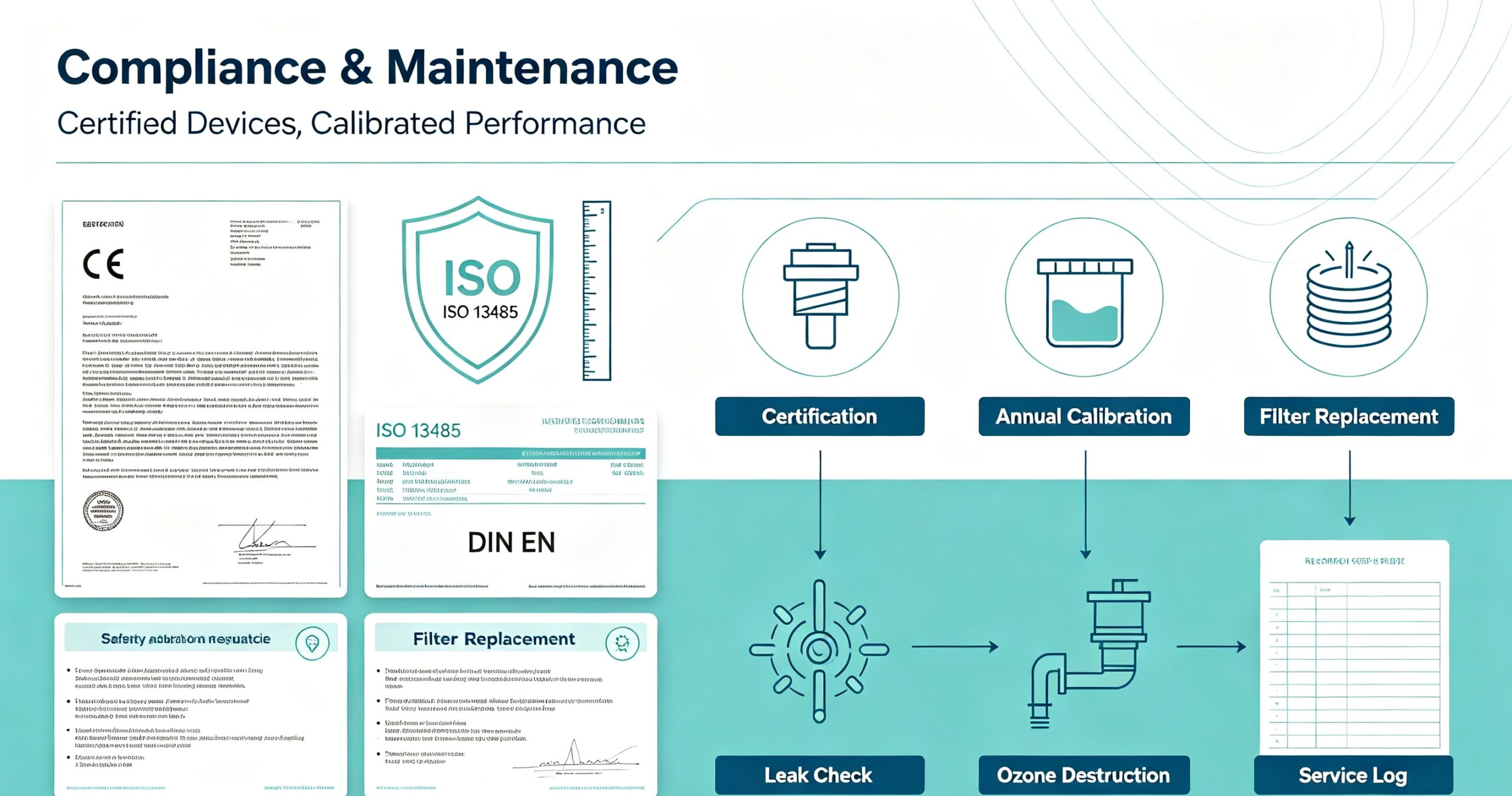
Being Class II/III medical devices in many countries, ozone therapy machines have to undergo stringent regulatory certification before being accepted into clinical use. The most respected world certification standards include the CE medical certification issued by EU, ISO 13485 medical device quality management system certification, as well as compliance with the DIN EN medical industry regulations.
According to ISCO3 procurement regulations, medical institutions and practitioners have to select devices that have complete certification documents, real-time concentration measurement systems, as well as standardized after-sales calibration services. It is essential to avoid unregistered devices that use air as a gas source and lack efficient measurement systems in order to prevent such clinical hazards as variation of dosage, occurrence of harmful by-products and low treatment consistency. Reliable devices normally come with an appropriate user manual where the information regarding calibration, maintenance and repair is recorded. - Daily Maintenance and Safety Operating Procedures
The lifespan and efficiency of ozone generators depend on proper daily maintenance and usage. First of all, regular calibration of the device should be performed, and it is advisable to have the apparatus professionally calibrated yearly with the help of calibrated external spectrophotometer in order to ensure accuracy of concentration of output. Secondly, replacement of oxygen filter and desiccating system should be done constantly to prevent accumulation of gas contamination and reliability of the treatment.
As for the usage of ozone treatment devices, operators should strictly adhere to the manufacturer’s manual and use medical-grade oxygen only. They should also avoid adjusting the parameters for ultra-high concentration for ozonic therapy procedures and check pipes’ tightness each time before they use devices in order to exclude ozone leaks. After the treatment it is necessary to switch on the ozone destructer to get rid of ozone residues in the pipes.
In addition, devices with automatic voltage switching systems (110V/220V, 50Hz/60Hz) are capable of working in a variety of environmental conditions with minimum rate of malfunctions. - Conclusion
Modern ozone treatment devices combine all the essential features of clinical devices being manufactured according to high international standards issued by such organizations as ISCO3. With continuous development of medical technology, intelligent, multifunctional and precision ozone treatment devices became a common thing in medical facilities providing treatment in various profiles. The key to successful ozone treatment is choosing ozone devices possessing international certification and adhering to strict operational and maintenance procedures.