
Research on the Scientific Mechanism and Clinical Application of Full-Spectrum LED Phototherapy Technology

An overview of full spectrum LED light therapy
Full spectrum LED light therapy is a modern one of the phototherapy therapies employing a high level of evidence. Unlike regular LED therapy that uses one particular wavelength, the full spectrum LED utilizes a wide spectrum of wavelengths in order to cover the spectrum of visible light as well as a part of the ultraviolet rays. The uniqueness of the full-spectrum LED light therapy lies in the use of the light of the entire spectrum, including blue, green, red, as well as near-infrared wavelengths. Full spectrum LED light therapy is widely used in many fields of medicine, such as dermatology, mental health control, sleep optimization, and physical rehabilitation among others.
- Definition of full spectrum LED light therapy
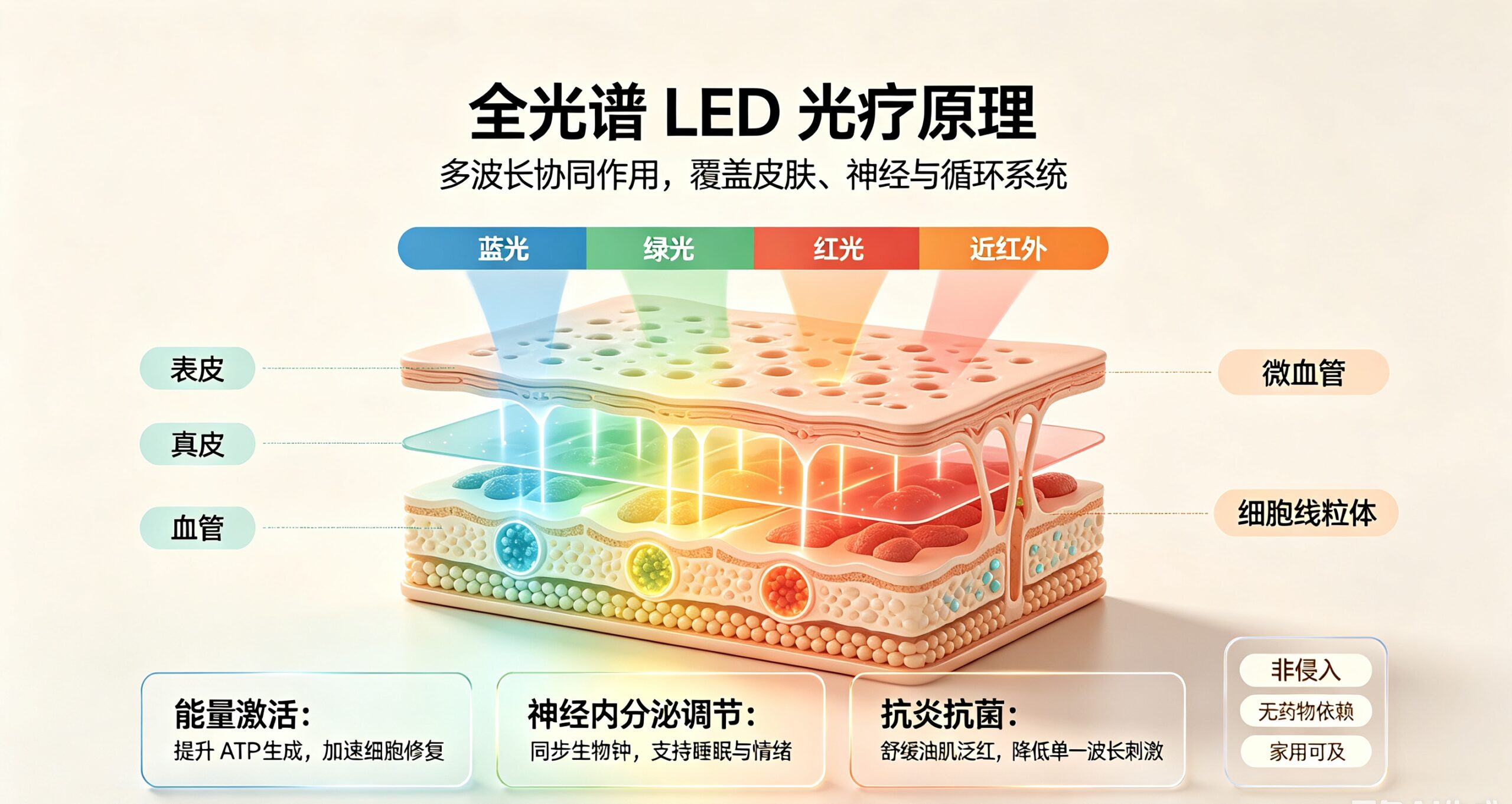
In simple terms, Full spectrum LED light therapy means the light therapy technique that uses the full spectrum LED chips to specify the wavelength. The wavelength of the full spectrum LED is composed all four critical wavelengths, allowing the full spectrum light therapy to perform better than using only one wavelength of the light.The uninterrupted and consistent spectral design avoids the downsides of monochromatic therapy with just one effect, achieving holistic physical treatment of human skin, nerves, and blood circulatory system. - Scientific Rationale
The benefits of full-spectrum LED light therapy stem from photobiomodulation (PBM) which involves a specific wavelength of light penetrating human tissue and interacting with photoreceptors like mitochondrial cytochrome C and tissue opsins to initiate a chain of positive reactions. Its main mechanisms include:
2.1 Energy Activation
Red and near-infrared wavelengths of light can penetrate the epidermis, reach cell mitochondria, boost the efficiency of ATP production, raise the metabolic activity of cells, and speed up the process of repair of damaged cells and regeneration of old cells. It forms the basis for the effects on skin anti-aging and tissue repair.
2.2 Regulation of Neuroendocrine Function
The proper visible spectrum can trigger retinal photoreceptors and regulate human circadian hormone secretion, blocking the secretion of melatonin in the daytime and stimulating its production at night. It deals with the problem of circadian rhythm disturbances, relieves seasonal affective disorder, and facilitates the cure of suboptimal health states characterized by anxiety and depression.
2.3 Anti-inflammatory and Antibacterial Action
The correct ratio of blue light and green light makes it possible to target microbial agents on the skin surface, decrease the level of inflammatory mediators, soothe redness and swelling, and tackle the problems of oily and mildly inflamed skin.In comparison to single blue light sterilization, the full-spectrum approach protects against skin dryness and irritation that results from the excessive use of a particular wavelength of light. - Main Benefits over Traditional Phototherapy
Compared to the use of traditional sunlight, the use of LEDs with one wavelength for therapeutic purposes and laser therapy, full-spectrum LED therapy has several benefits which make it extremely popular among both doctors and general public:
3.1 High Safety and Low Irritation: Full-spectrum LED devices effectively filter harmful UVC light and excessive blue light. The treatment does not cause burns and other problems associated with sun exposure or other phototherapy procedures.
3.2 Multi-Effect Synergy and Wide Adaptability: Full-spectrum LED therapy helps integrate various functions of skin care and rehabilitation to overcome disadvantages of traditional single-wavelength phototherapy.
3.3 Non-Invasive and Drug-Free: Since this is a type of physical therapy, this method does not entail drug use or surgical procedures, meaning that it does not cause any side effects.
3.4 Portable and Intelligent: Unlike bulky traditional laser therapy devices, modern devices for full-spectrum LED therapy are designed in such a way as to make it possible to use them at home and adjust the length and intensity of the procedure according to individual needs.
4.Primary Clinical and Everyday Use Cases
4.1 Dermatological Aesthetic Treatment and Skin Recovery
Full-spectrum light therapy is popularly utilized in beauty and dermatology treatment establishments. It can treat acne and acne scars as it works against infections and decreases inflammation, promote recovery of the mildly invasive postoperative skin, reduce pigmentation and wrinkles, and lead to improvements in dull and rough skin. Continuous use of controlled doses improves skin barrier and helps to normalize skin metabolism.
4.2 Mental Wellbeing and Circadian Rhythm Improvement
Numerous studies have established that full-spectrum white light therapy is the most effective light therapy for seasonal affective disorder (SAD). Standard doses of light can synchronize biological clock, decrease seasonal depression, depressive mood state, and tiredness, as well as resolve insomnia, trouble sleeping, and superficial sleep associated with circadian rhythm disorder. Bright light therapy has been accepted as a safe adjunct treatment for mood disorders in international guidelines for bipolar disorder.
4.3 Physical Rehabilitation and Fatigue Relief
Near-infrared spectrum in full-spectrum light reaches deep tissues of muscles and joints, causes local blood microcirculation, alleviates aching muscles, sore joints and chronic fatigue being a result of hours spent sitting or exercises, and helps in recovery from minor injuries of soft tissues.4.4 Daily Eye Protection and Sub-Health Improvement
Incorporating full-spectrum light to mimic natural sunlight allows you to reduce eye strain that occurs as a result of your frequent exposure to standard artificial light, which, in addition to benefitting retinal health, positively contributes to slowing or preventing myopia in young people. Moreover, it solves the issue of mental fatigue that arises from spending too much time in enclosed indoor spaces and improves the overall sub-health condition of human body. - Standard Usage Guidelines and Safety Precautions
5.1 Standard Usage Parameters
On the basis of the available evidence obtained through several clinical studies and professionals’ opinions, household and civil full-spectrum LED therapy devices should emit light at an intensity of 10,000 lux, which represents an optimal level of light intensity for light therapy purposes. The recommended length of time for the therapy is from 15 minutes to half an hour. First-time users should start at 15 minutes and extend up to 30 minutes over time. If you want to improve mood, the therapy should be performed in the morning, while for skin restoration and relief of fatigue it can be performed in the morning or evening.
5.2 Crowd Adaptability and Contraindications
This type of therapy is good for the great number of healthy people and sub-healthy patients (for example those with insomnia, unstable emotions, skin conditions and mild muscle tension). It is not appropriate for those suffering from severe allergies to light or those who have severe hyperthyroidism or patients taking photosensitive medications. Pregnant women, babies, and those with chronic conditions need to get consultation with their doctors before using light therapy.5.3 Notes for Daily Use
When using the light, one should not gaze upon the light source for a long time, too close to the light source, or over-irradition it to avoid mild dryness of the skin. Make sure to only purchase FDA-cleared and clinically proven devices to avoid substandard products. - Current Trends in the Industry?
With the further introduction of the optoelectronic technology into preventative medicine, the full spectrum light therapy will now become personalized, intelligent, and compact. The size of existing medical equipment will be decreased significantly, with the devices automatically adjusting their operating parameters according to one’s conditions. The usage of the full spectrum LED light therapy will be expanded, covering many new areas including medical treatment, home health care, and chronic diseases of the elderly people.
Full-spectrum LED light therapy is a new non-invasive and effective technology in the field of light therapy, allowing overcoming the negative aspects of traditional single-type light treatment. It is expected to become one of the core technologies in the sphere of light therapy. - Conclusion
Full-spectrum LED light therapy opens a way for multi-side health treatment based on the simulation of natural balanced sunlight. The advantages of full-spectrum LED light therapy technology in skin healing, mood stabilization, and sleep optimization are impossible to replace. The methods are highly effective and safe.