

Clinical Principles and Practical Applications of Non-Invasive Rectal Ozone Therapy

Rectal Ozone Therapy: Mechanisms, Benefits, Safety and Clinical Applications
Numerous individuals hear for the first time about rectal ozone therapy and wonder: How can harmless medical ozone gas delivered in the rectum contribute to overall body recovery? Is it dangerous? Who needs it?
Contrary to various intimidating invasive medical treatments, the rectal ozone therapy (often called rectal ozone insufflation) is a non-invasive, needle-free treatment and therapy that has been largely used in recovery of gut functioning, regulation of chronic inflammation processes, immune control and metabolism in holistic as well as conventional medical practices worldwide.
This tutorial explains how it works: its logic, mechanisms of action, appropriate patients, standards of procedures and safety rules in an easy-to-read format.
- Definition of Rectal Ozone Therapy
Rectal ozone therapy is a defined procedure where a mixture of ozone and oxygen is injected into the rectal cavity through a sterile and soft silicone tube. The rectal mucosa has very dense network of capillaries which ensure that ozone can pass almost instantly into the circulation through the portal vein, then transport ozone to liver and the whole blood.
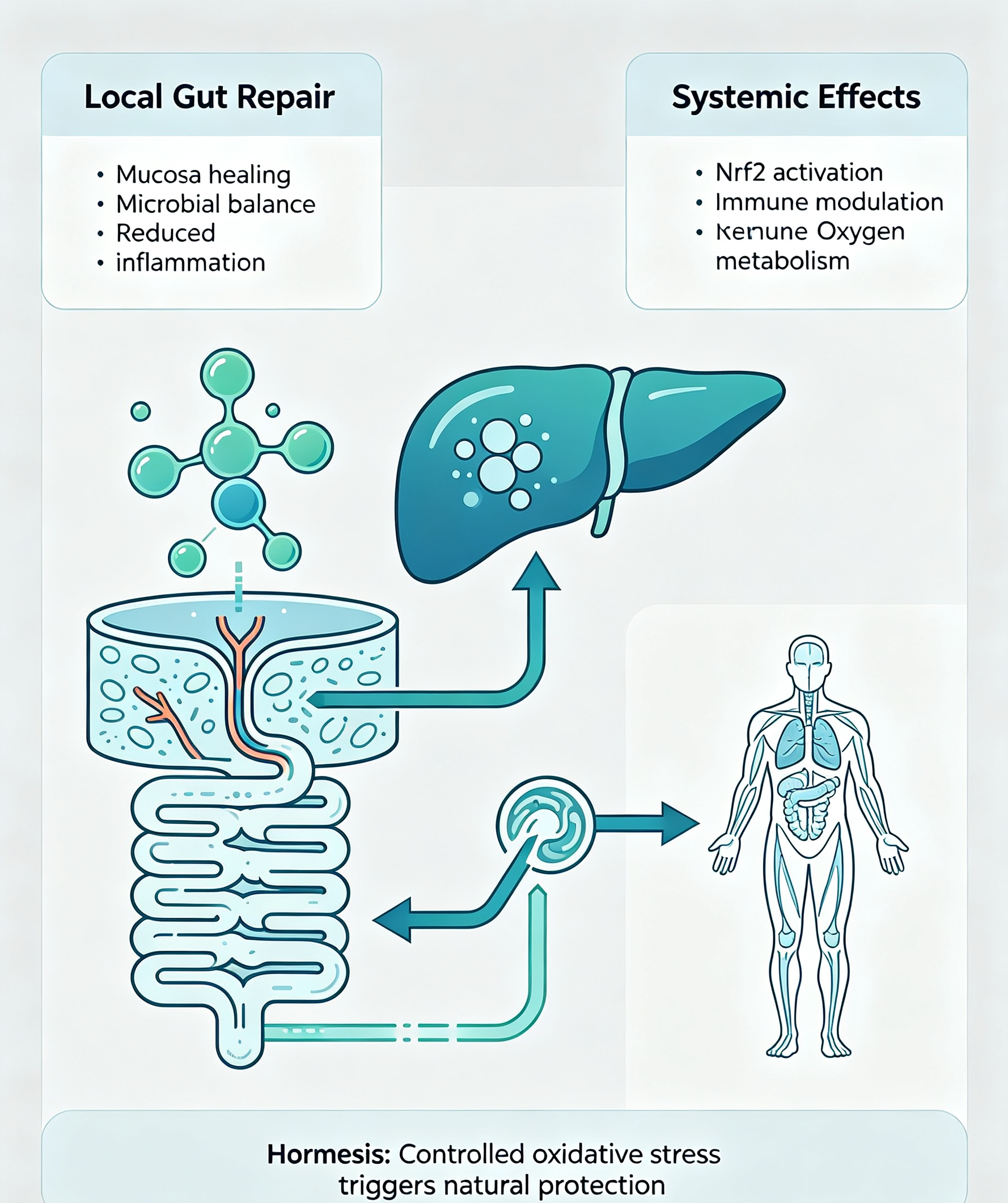
In comparison with oral medications that may be subject to gastric destruction and first-pass metabolism, the rectal route does not lead to ozone destruction by gastric acid and first-pass metabolism in the liver.The healing benefits of rectal ozone therapy derive not from “passive oxygen supplementation,” but rather involve distinct biochemical and physiological processes identified by science. The essential reasoning behind it may be found in three facets: local intestinal regeneration, regulation of immune system and antioxidant effects.
2.1 Local Impact: Clean Environment for the Gut and Reparation of Mucosa
Ozone possesses mild and selective oxidative abilities, targeting harmful microbes in the intestinal tract. It destroys harmful microorganisms’ cellular walls and membranes and the incorporation of ozone leads to the inactivation of viruses and stopping their replication cycle. However, at the same time, ozone does harm less beneficial microorganisms and thus restores the balance in intestinal flora (dysbiosis).
For the damaged intestinal and rectal mucosa, ozone contributes to reducing the swelling and redness of the area, improves blood circulation in the area, and speeds up the process of healing. This makes ozone treatment effective for lower abdominal inflammatory processes, recurrent rectal pain and recovery from inflammation.
2.2 General Effect: Activation of the Body’s Self-Defense Mechanism
Following ozone contact with the rectal mucosa and the lipids, it gives rise to two vital biologically active compounds: oxidants and lipid peroxides. These compounds function in the organism as signaling agents and provoke a chain of reactions:
- Activation of antioxidant mechanisms: stimulation of the antioxidant pathway Nrf2/Keap1/ARE causing the enhancement of the body’s innate antioxidant mechanism that allows neutralizing excessive radicals and improving the state of oxidative stress in the body.
- Immunological adjustment: it inhibits excess inflammation, and increases activities of immune cells when the organism is under an immunocompromised condition giving no chance to immune reactions.In particular, the key objective of the introduction of ozone therapy is to optimize the body’s oxygen metabolism cycles so as to enhance blood oxygen transport and microcirculation processes and eliminate hypoxia in the tissues and provide their full recovery by allowing adequate consumption of energy and nutrients for the recovery of tissues.
2.3 The Hormesis Effect
Oxidative hormesis is the main mechanism used in clinical ozone therapy. Controlled oxidative attacks don’t damage the cells but rather kick start their natural protection, enabling better recovery and protection in the future. That is the reason why rectal ozone therapy is effective in the treatment of chronic diseases.
- Clinical and Practical Applications
As a result of many international clinical experiments and consensus on the medical use of ozone, rectal ozone therapy is applied in gut health, chronic inflammatory diseases, and sub-health with strict inclusion criteria.
3.1 Gut Health
It is the first-line treatment for gut dysbiosis, flatulence, digestive disorders, mild IBD, and post-infectious intestinal syndrome. It can resolve defecation problems and alleviate abdominal bloating and low intestinal immunity due to microbiota imbalance.
3.2 Chronic Inflammation and Sub-Health
Patients suffering from chronic fatigue, insomnia, stress, or up as a result of chronic low-grade inflammatory processes can benefit from rectal ozone therapy, which lowers inflammation levels, restores balance in the neuroendocrine system through the gut-brain pathway, and improves both sleep and psychic state.3.3 Detoxification of the Liver
Ozone enters the liver through the rectal portal vein, facilitating metabolism during the liver processes. The higher metabolic rate enables processes like detoxification and regulation of functions of liver.
3.4 Benefits for Specific Groups of People
With rectal ozone insufflation, there is no need for needles unlike intravenous ozone therapy. This makes the procedure more appropriate for those suffering from fear of needles and other weaknesses that do not allow for invasive treatment procedures. Additionally, it serves as a complementary rehabilitation method for patients who receive chemotherapy or radiotherapy and develop either intestinal or pelvic inflammatory conditions .
- The Safety and Painless Process of Treatment
Many are concerned about the discomfort resulting from treatment procedures. However, this therapy is actually very gentle and routine: - Preparatory phase: The bowels are emptied so that the procedure can be performed in the cleanest environment possible that maximizes the level of absorption.
- Sterile technique: The use of single-use sterilized soft silicone catheter helps avoid infection during the procedure by inserting it into the rectum without a high level of discomfort.
- Accurate insufflation: The pump produces ozone-oxygen mixture with adjustable concentration так нетворк some discomfort may occur during the process.Treatment session duration. An individual tends to stay for an average of 20-30 minutes, the absorption is steady and easy, no implications occurs for everyday life of patient after the treatment .
- Safety of the treatment, side effects and contraindications.
Standardized rectal ozone therapy is very safe but not universal. Safety of the treatment is achieved thanks to standardized process of treatment and preliminary screening of patients.
5.1 Mild reactions.
A small number of people may have slight gastroenteric disorders or feel mild fatigue after the treatment which signifies metabolic adjustments of the organism which are completely normal and take a short time.
5.2 Absolute contraindications.
- Patients suffering from acute rectal bleeding or with risk of intestinal ulcers and perforations
- Pregnant women, women who nurse, patients suffering from acute stage of autoimmune diseases
- Patients with severe heart diseases and cerebrovascular diseases and with unstable vital signs
- Persons who are allergic to ozone
5.3 The core of safety principles.
Only use ozone of medical grade and under control of required concentration. Too high concentration used in inappropriate way may cause irritation of intestinal mucosa.
- Common misconceptions.
Myth 1: Ozone is harmful for the body.
Fact: Harm can be caused only due to high concentration of ozone, medical ozone being used by low dose as per mechanism of hormesis. Ozone does not cause oxidative destruction but rather launches the healing processes
Myth 2: Ozone has miraculous healing properties.
Fact: Ozone is of help as an additional treatment method for immune modulation and restoring health of the eco-system of the organism but it is not a substitution to drugs used to treat serious diseases.
Myth 3: The higher the concentration – the better effect.
Fact: Too high concentration can cause irritation of intestinal mucosa.