

Blood Therapy: Clinical Applications, Core Types and Standardized Clinical Practice

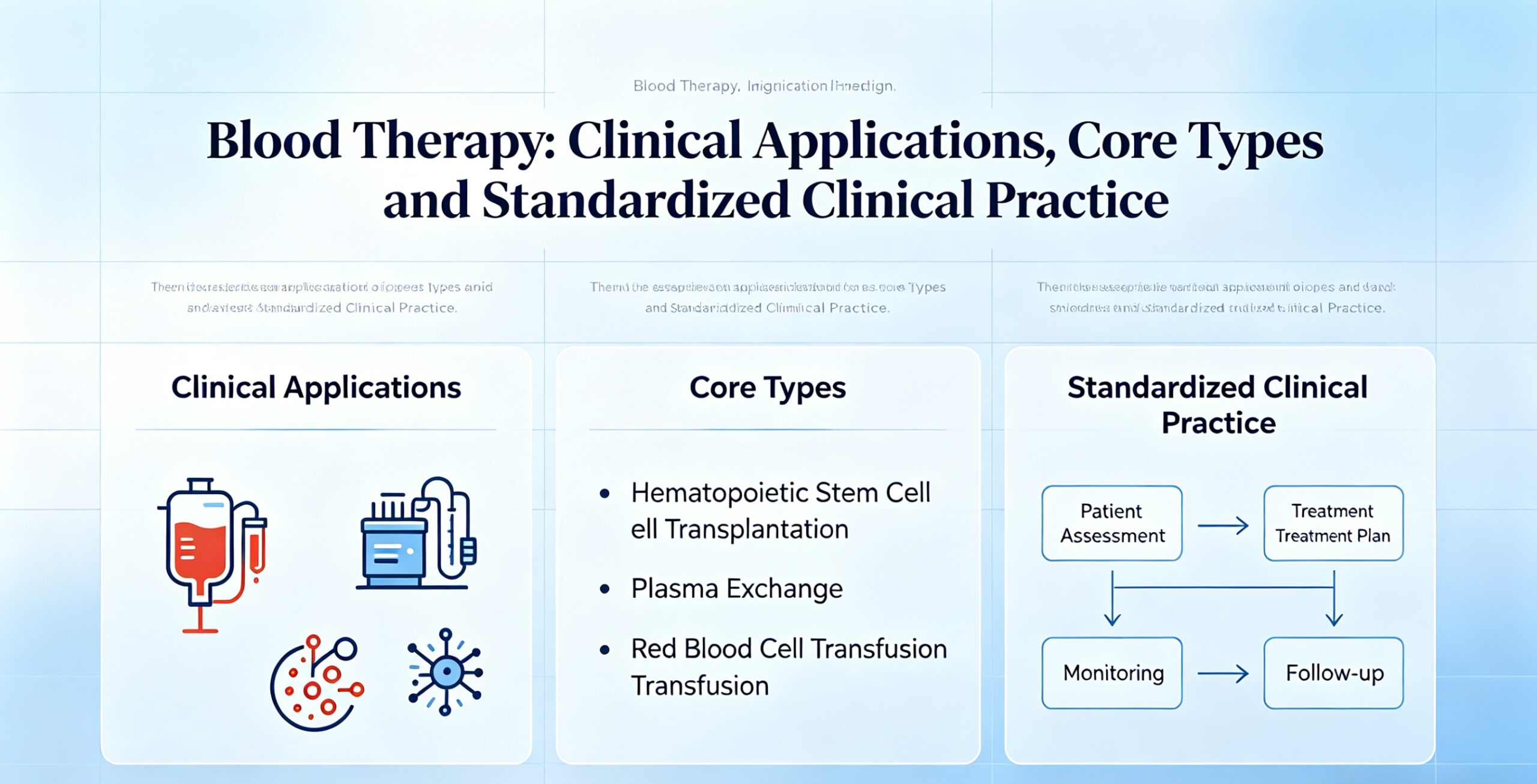
Therapy using Blood in Support of Patients and Treatment of Other Disorders
Blood therapy is a grouping of multiple medical procedures performed on or with blood, the components of blood, or variants of a person’s own blood (e.g., engineered from bacteria using an apheresis-type process). Blood therapy is used for the treatment of disease, prevention of disease, and relief of symptoms. Blood therapy is used across several medical areas (e.g., hematology and critical care), and has an overall goal of correcting deficiencies within any of the components of blood, modulating the immune system, or removing potentially toxic blood-borne products from the blood in order to aid the treatment of patients with various disorders.
The two most common types of blood therapy are blood transfusion and autologous blood therapy. Blood transfusions are the direct administration of healthy blood from a healthy donor(s), via a vein (i.e., intravenous), to replace the volume of blood lost due to bleeding caused by injury or surgery, to treat diseases such as severe anemia or diseases of clotting. By contrast, autologous blood therapy is using a patient’s own blood that has been modified by one of multiple methods (e.g., ozonation or centrifugal separation) to create a form of blood that has beneficial properties than the original form, which the patient can then have the benefit of the modified blood re-administered back to him/her. Examples of autologous blood therapy include platelet-rich plasmas (PRP) and ozonated autohemotherapy, both of which can be used for the treatment of chronic inflammatory conditions, tissue repair, and other similar medical conditions.
Blood therapy in the clinical environment must comply with rigorous and standardised operating procedure protocols. For blood transfusions, both blood type determination/matching and blood safety testing must be performed and documented prior to the administration of blood to the patient, in order to prevent the patient from developing a post-transfusion complication (e.g., alloimmunization). Autologous blood therapy must also comply with stringent operating procedures, and care must be taken to eliminate contraindications (e.g., G6PD deficiency) in order to provide effective and safe individualized treatment for each patient. Advances in medical technology will provide even more options for the development of individualized blood therapy treatments to further improve the end result (e.g., recovery) of patients.