

Research on Medical Ozone: Characteristics, Functional Mechanisms, Medical Application and Safety Management

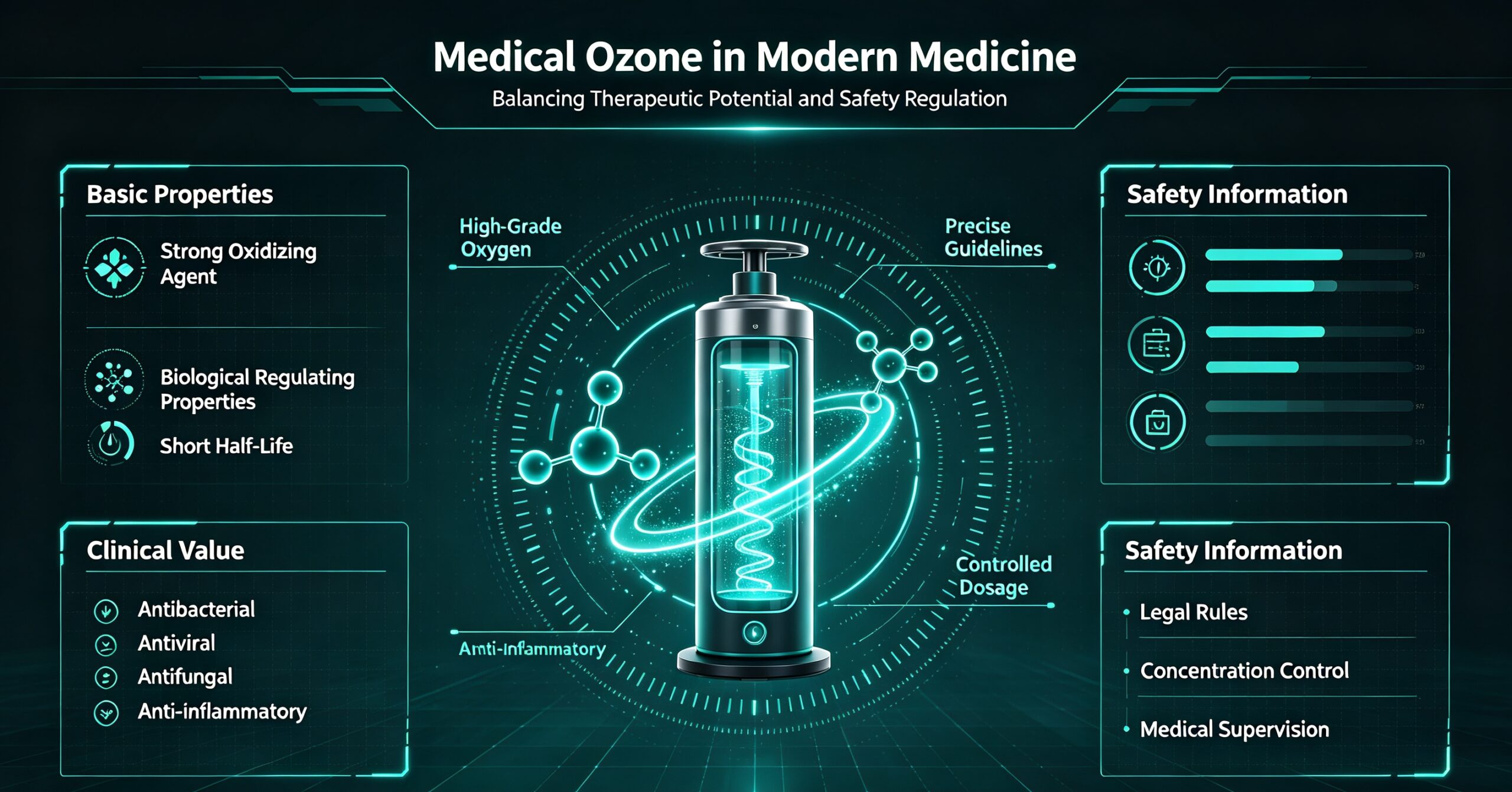
Medical Ozone: Mechanisms, Value in Medicine and Safety Information
Abstract: Medical ozone is ozone (O₃) produced from high-grade oxygen which is a strong agent of oxidation used in many modern treatments. In contrast to its atmospheric equivalent, it is produced under precise guidelines concerning its concentration and dosage, which is the reason for its unique properties of being anti-microbial, anti-inflammatory, immune-boosting and supportive tissue healing agent. This paper reviews the basic characteristics of medical ozone, its principle medical uses, the legal rules of its application and safety regulations associated with ozone.
- Basic Definition and Properties of Medical Ozone
Medical ozone is a special type of gas created by high voltage electrolysis process of oxygen which is free from harmful for human nitrogen oxides. It is the only gas that combines biocide and biological regulating properties. At normal temperatures and pressures ozone molecules are unstable and can quickly transform to oxygen and oxygen free radicals with their half-life period being 20-50 minutes. - Mechanisms of Action of Medical Ozone
The biologic impact of ozone can be attributed to the formation of hydrogen oxides and ozonides during ozone’s reaction with body tissues. Ozone can kill bacteria, fungi, viruses and spores causing infection, therefore being the perfect substitute for antibiotic medication which is known for the problem of emergence of drug resistance.