

Ozone Therapy: Biological Mechanisms, Clinical Practice, Safety Profile and Empirical Benefits

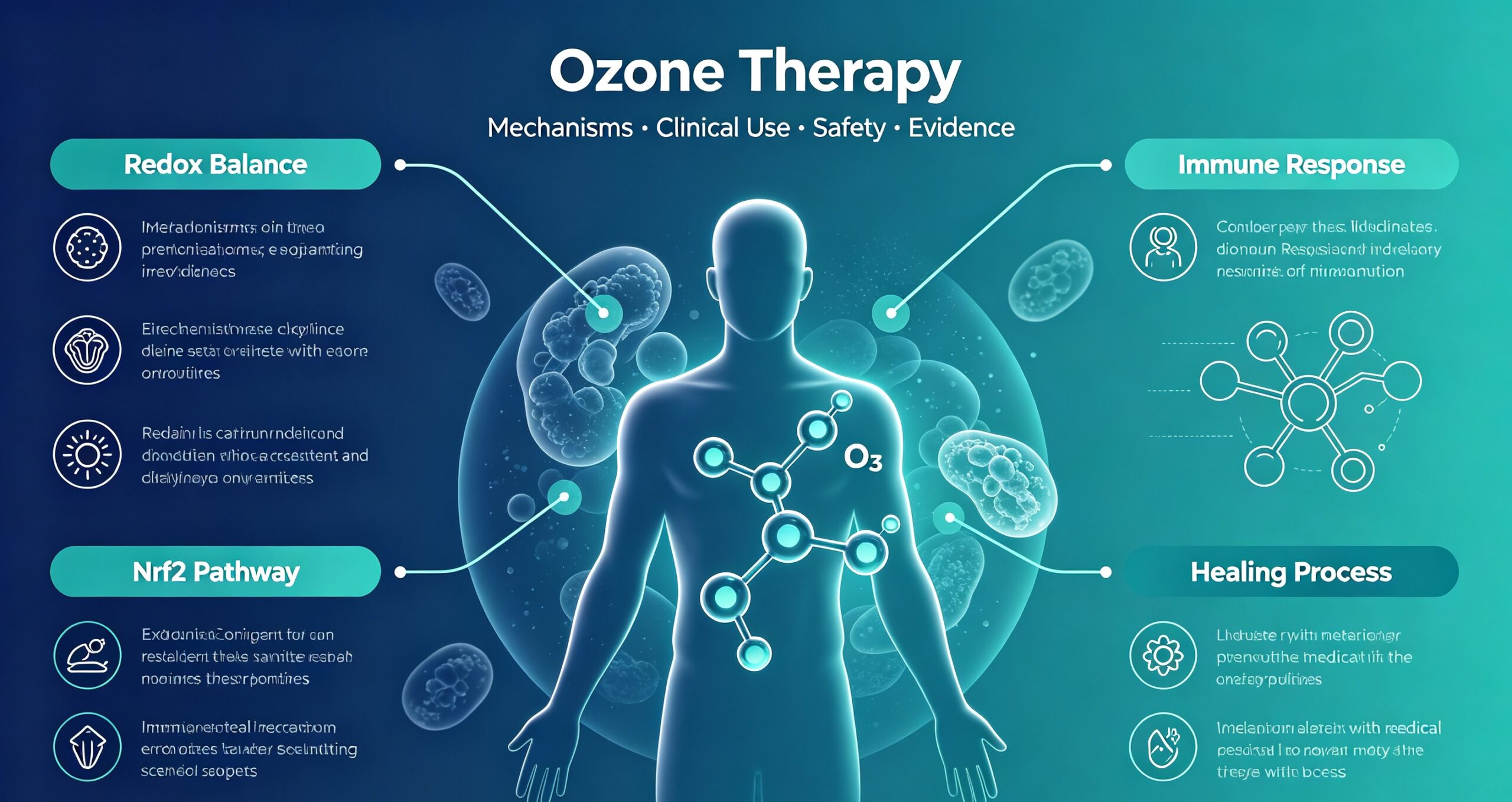
The Application of Ozone Therapy: Mechanisms, Clinical Applications, Safety Profile, and Evidence-Based Benefits.
Summary:
Ozone Therapy is a regulated supplementary treatment that uses properly measured amounts of medical ozone (O₃) for the purpose of impacting the oxidation-reduction (redox) processes occurring in the human body, the immune response, and the body’s healing process.
Taking into account the long history of the application and scientific validation of this methodology, it can be said that ozone therapy has been proven to have hormetic biological properties that make the treatment effective for reducing oxidative stress and inflammation, as well as enhancing recovery processes.
This article is an overview of the most important biological mechanisms, common protocols, safety recommendations, and contemporary limitations of ozone therapy.
- Ozone Therapy Introduction
Ozone is a compound with the chemical formula O₃ that has powerful hydrating properties and strong oxidation potential. Medical ozone is a mixture of pure oxygen and ozone produced by medical devices, unlike industrial ozone. The wide implementation of ozone therapy started during the First World War.
The principles of ozone therapy involve its hormetic effects when low doses of ozone stimulate the organism’s functions while big amounts of ozone are toxic.
Ozone therapy promotes the therapeutic impact due to three biological mechanisms being applied. - Biological Mechanisms of Ozone Therapy
Ozone therapy is built on three biological pathways that are well-researched and proven to be the underlying mechanisms that determine the efficacy of ozone treatment.
2.1 Restoration of the Redox Balance and Activation of the Nrf2 Pathway
Under the controlled conditions, the influence of ozone generates small signals of oxidation of tissues which triggers preconditioning. One of the crucial components of this process is Nrf2 (nuclear factor erythroid 2-related factor 2) pathway activation.