

Mechanisms, Clinical Applications, Safety Protocols and Research Progress of Medical Ozone Therapy

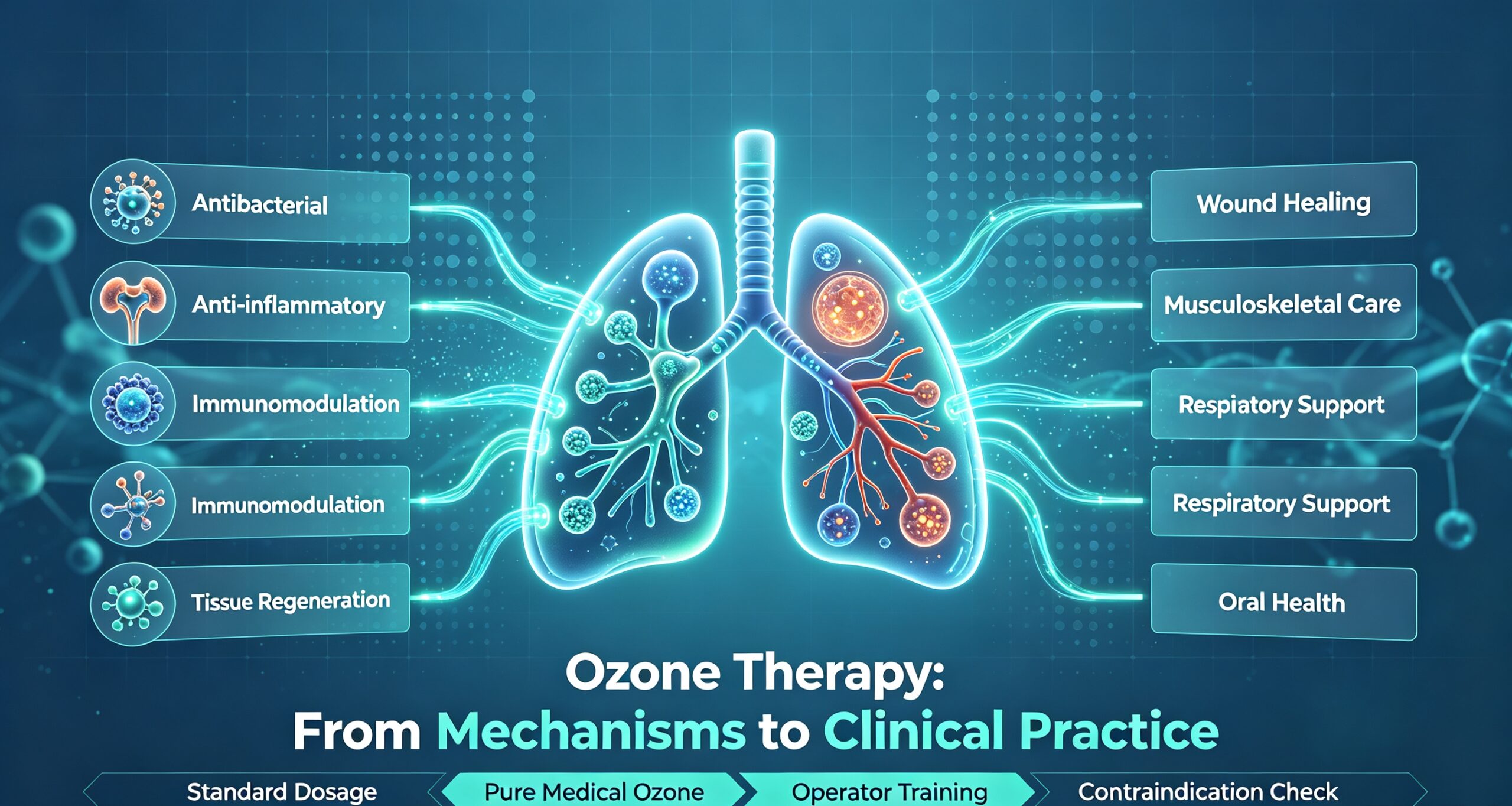
Ozone Therapy: Mechanisms, Clinical Applications, Safety Protocols and Current Research Progress
Abstract: Ozone therapy is becoming more popular as an option for both complementary and alternative medicine practice in the field of integrative medicine, regenerative medicine, and therapy for chronic diseases. Medical ozone possesses exceptional anti-bacterial, anti-inflammatory, immunological, and regenerative tissue properties, influencing the human body through the regulation of oxidative stress. This paper provides comprehensive coverage of the biochemical processes that occur in the application of ozone in medicine, the ways in which ozone is delivered to the body, the common applications of ozone therapy in medicine and the safety protocols governing its use.
Using up-to-date evidence from clinical trials and studies undertaken in connection with ozone therapy, it attempts to demonstrate the significance of ozone therapy for medicine along with its spheres of application.
Keywords: ozone therapy; medical ozone; immunology; anti-inflammation; tissue regeneration; clinical application; protocols of safety.
- Introduction to Ozone Therapy
Medical ozone therapy is a planned application of ozone with the correct concentration and dosage (pure medical ozone gas), meaning that in ozone therapy, only ozone in approved concentrations can be used, whereas industrial ozone consists of toxic impurities.
Medical ozone differs from ordinary oxygen inhalation, as the latter can be viewed as a stress factor, while a small amount of medical ozone initiates the production of necessary enzymes, which are responsible for antioxidant protection without causing any harm to the body.
Ozone therapy has gained popularity in the last few years as a subject of scientific work, and today ozone therapy is included in treatment protocols for numerous diseases in different parts of the globe.Possessing the benefits of non-invasiveness, low incidence of adverse reactions and interference of several targets, it has gained acceptance in a range of applications, such as wound healing, musculoskeletal disorders, diseases of the respiratory system, and immune adjustment. However, the establishment and standardization of ozone treatment practices are complicated because of the diversity of clinical practices and a lack of proper large-scale RCTs. - Main Biochemical Mechanisms of Action of Ozonotherapy
The action of ozonotherapy is explained by its specific biochemical reactions with human body cells, fluids, and tissues and includes four key mechanisms regarded as the main areas of research in medicine.
2.1 Antibacterial and Antioxidant Mechanisms
Ozone has a wide spectrum of antibacterial, antiviual and antifungal activity; ozone destroys the membrane structure of pathogens and oxidizes microbes’ proteins and nucleic acids halting the processes of replication of microbes and bacteria in contrast to antibiotics, ozone does not cause the microbe’s resistance on drugs allowing treatment of drug-resistant infections. Moreover, ozone in low concentration is an activator of the body’s antioxidant system that stimulates the synthesis of superoxide dismutase and glutathione peroxidase providing the elimination of excess free radicals.
2.2 Anti-inflammatory and Analgesic Mechanisms
Ozone therapy is capable of regulating the concentration of inflammatory cytokines in the organism as it reduces the level of pro-inflammatory factors (IL-2, IL-6, IL-8, TNF-α) and activates the production of anti-inflammatory cytokine IL-10 preventing the inflammatory response.from amplifying in a cascade manner.
In inflammatory diseases of the musculoskeletal system and soft tissues, ozone can decrease local edema and inflammation, inhibit the conduction of pain impulses, and provide non-invasive analgesia and anti-inflammatory action, proving its advantage over conventional anti-inflammatory medications in terms of prolonged treatment.
2.3 Systemic modulation of immunity
Ozone is a powerful immunomodulator capable of affecting the activation and transformation of T-lymphocytes, B-lymphocytes, and NK-cells as well as enhancing both cellular and humoral immunity. For individuals suffering from immune disorders and deficiencies, the use of ozone systemically can help to restore the immune balance and ensure an enhancement in fighting against infections and reduction in the frequency of chronic inflammatory disorders.
2.4 Stimulation of tissue repair
One more impact of ozone is improvement of blood microcirculation locally – it supplies tissues with oxygen and nutrients and stimulates fibroblast and epidermis cell proliferation. It means ozone promotes the formation of new tissue and speeds up the process of wound healing. Ozone treatment is applied widely in the treatment of chronic wounds and burns. - Generic application routes of ozone therapy
Speaking about the specifics of the treatment applied for patients, ozone therapy can be systemic and local.3.1 Systemic Ozone Therapy
Systemic interventions work on whole body system using circulation of blood or other bodily fluids. Systemic ozone therapy includes a method of major autohemotherapy (MAH) and intravenous ozonated glucose infusion. The method of major autohemotherapy is the classical systemic method of treatment. This involves taking some amount of blood from vein and mixing with medical ozone and injecting back into the body for reflection. This procedure allows for the immune regulation and oxidative balance improvement and is performed with chronic diseases, immune diseases and for rehabilitation purposes after diseases.
Intravenous infusion of ozonated 5% glucose solution is another systemic method that includes no process of blood extraction making it easier for patients. Both above-mentioned methods can improve patient’s life quality significantly.
3.2 Local Ozone Therapy
Local interventions work on particular areas of tissues in a strict dose approach. This includes application of ozonated water on skin inflammation, rectal insuflation with ozone, and leaking ozone into joints. Ozonated water is widely applied to wounds and infections of mucous membranes because of its safe and irritating properties. Leaking ozone into joints is the central treatment method for the patients with osteoarthritis. Injecting ozone into the rectum is helpful for thoseCommon Medical Applications of Ozone Therapy
According to research supported by solid knowledge of medicine and clinical agreement, ozone therapy has established mature systems for treating different types of diseases.
4.1 Treatment of Injuries and Skin Disorders
Ozone therapy is one of the best co-medications for treating chronic resistant injuries such as diabetic foot injuries, bedsores, burn injuries, and postoperative infected injuries. This method has a wide range of antimicrobial properties and the ability to accelerate recovery. Apart from that, ozone therapy is helpful for treating mycosis, eczema, and herpes skin disorders.
4.2 Treatment of Muscle and Joint Affections
Ozone therapy is very popular in treating osteoarthritis, lumbar herniated disc, cervical spondylosis, and chronic pain caused by soft tissue injuries. Some studies show that ozone injections into the affected joint are more effective in treating knee osteoarthritis than traditional methods, because this method causes fewer injuries and takes less time.
4.3 Treatment of Diseases of the Respiratory System and Infectious Diseases
In the field of treatment of respiratory diseases, ozone therapy can improve the capacity of the lungs for oxygen diffusion and physical activity. In cases of acute respiratory disease and chronic obstructive pulmonary disease, the application of ozone will help shorten hospitalization duration and minimize inflammatory response. In recurrent respiratory infections, ozone therapy can help combat infections through the regulation of the immune response.Dental and Oral Diseases
Medical ozone is used for the treatment of dental caries, periodontitis, oral candidiasis, and postoperative wound healing in the mouth. It is capable of killing bacteria in the mouth, resolving local inflammatory process in the gum tissue, and promoting the healing of the wounds of gums. In addition, application of ozone prevents side effects of chronic use of antibiotics.
Chronic Metabolic and Immune Diseases
In patients with diabetes, ozone therapy improves metabolism of carbohydrates and fats in the blood, enhances circulation, and prevents possible complications of diabetes; in autoimmune diseases, ozone therapy is able to restore the immune status and improve chronic symptoms of the patients.
Safety Precautions and Contraindications of Ozone Therapy
Despite the high degree of safety of ozone therapy, the use of non-standard doses, concentrations, and techniques may result in adverse effects. Adherence to safety standards is essential for the clinical application of this method.
Adverse Effects and Mechanism of Toxicity
High doses and concentrations of ozone may cause it to produce increased oxidative stress, which produces irritating effect in the soft tissues causing mild side-effects such as headache and dizziness. However, in unusual cases, the procedure can cause ozone-induced encephalopathy due to the application of wrong technique.5.2 Absolute and Relative Contraindications
Severe anemia, enzyme glucose-6-phosphate dehydrogenase deficiency, acute bleeding diseases and allergy to ozone are absolute contraindications. Other contraindications are pregnancy, severe issues with heart and brain blood vessels, and acute inflammation. From a clinical viewpoint, individual adjustment of the dose and the scheme of ozone therapy is necessary to provide safety of the therapy.
5.3 Standard Operating Conditions
Clinical ozone therapy must involve medical pure ozone equipment to prevent industrial pollution. A safe dose range (eustress zone) should be followed during the therapy and doses above prescribed and long-term application of ozone therapy should be avoided. Adopting a standardized training approach for operators is required to ensure a standardized process of blood collection, mixing, injecting and other activities. - Limitations of Current Research and Future Perspective
At the present moment, one can notice evident gaps in ozone therapy research. Many of the currently existing works are single-center, small-scale studies characterized by lack of multi-center, controlled, randomized, double-blind studies and thus insufficient evidence base in terms of competent evidence-based medicine. In addition, the whole molecular mechanism of ozone therapy is only partly understood, especially an epigenetic effect of ozone on cells. Another important issue is absence of a unified global dosage system, as well as the fact that protocols of ozone therapy carry serious gaps in terms of similarities among various institutions.
The future trajectory of ozone therapy research will be thus focused on creation of a standardized set of protocols involving in-depth studying molecular mechanisms of action of ozone for further combined use in regenerative therapy. With the advent of evidence-bases medicine, ozone therapy is going to be getting increasingly standardized and widely used as an additional means of therapy. - Conclusion
Ozone therapy is a safe, effective and multi-faceted integration technique with its unique therapeutic benefits due to its antimicrobial, anti-inflammatory, immunomodulatory and regenerative action. As of now, ozone therapy has demonstrated very good results in treatment of wounds, musculoskeletal disorders, respiratory infections, oral diseases and chronic immunity disorders. Standard protocols and strict safety measures are the key ways to make sure that ozone therapy is applied in a safe manner. However, it’s worth mentioning that there exist certain limitations in the current research.