

Medical Ozone Generators: Core Technology, Clinical Use and Safety Protocols

Medical Ozone Generator: Mechanism, Application in Medicine and Safety Protocols
A medical ozone generator is a device used only for medical purposes. This device generates controlled amounts of highly pure ozone gas (O₃) for medical applications such as treatment, sterilization, and support procedures. Ozone generators for medical use follow guidelines established in medicine, which include the quality of source gas, generating technology, the correctness of concentration, and safety measures. These devices are successfully used in contemporary integrative medicine and dermatology; therefore, they are in high demand among specialists of medicine and medical institutions.
- Schemes of Operating Medical Ozone Generator
Ozone is an active molecule of oxygen which consists of three oxygen atoms and possesses oxidizing and germicidal properties. The ozone-generating process is based on an advanced technology which allows changing oxygen into ozone. The method of corona discharge is the single and the most popular method of gas production.
The process in the ozone generator is carried out in accordance with strict biological protocols. Pure gas (≥99.5%) is used for ozone production. The device uses oxygen only, avoiding any other kind of gas sources to prevent impurities that may cause the ozone generator to produce non-sterile ozone.The issue lies with a low ozone output, unstable concentration, and poor reproducibility that do not comply with the precise dosage requirements of clinical treatment. - Key Technical Criteria of Medical-Grade Ozone Generators
The main difference between medical ozone generators and regular ozone devices is the stringent medical qualification standards to be met. Only the instruments having the following essential technical characteristics can be applied in human medicine:
2.1 Medical Gas Source Compliance
Medical ozone must be produced from certified medical high-pressure oxygen cylinders with an oxygen purity of no less than 99.5%. The use of industrial oxygen and regular air in medical ozone production is prohibited due to the danger of infections and toxicity caused by contaminants present in the gas and lack of sterilization of the air.
2.2 Accurate Concentration and Flow Control
The efficiency of ozone treatment depends greatly on concentration accuracy. Medical ozone generators allow adjustable oxygen to flow (1–10 L/min), and ozone concentration varies inversely with the oxygen flow rate, meaning that the generators can be calibrated continuously. It means that the instrument is capable of ensuring constant ozone generation in different modes of operation so that the treatment results are the same and dose deviation does not cause any therapeutic failure or damage of the tissues of the patient.
2.3 Safety Treatment of Remaining Ozone
In accredited medical ozone generators, built-in catalytic decomposition systems are installed. At the end of every working cycle, all remaining ozone is turned back into oxygen, preventing the ozone from getting into the human respiratory system and polluting the medical environment.2.4 Anticorrosive and Sterile Design
The gas pipeline and contact parts of the medical ozone generators use medical-grade anticorrosive material, with the ability to resist oxidation and corrosion caused by active ozone, avoid precipitation of heavy metals, and maintain sterility and safety of the output gases over a long time. - Main Clinical Uses
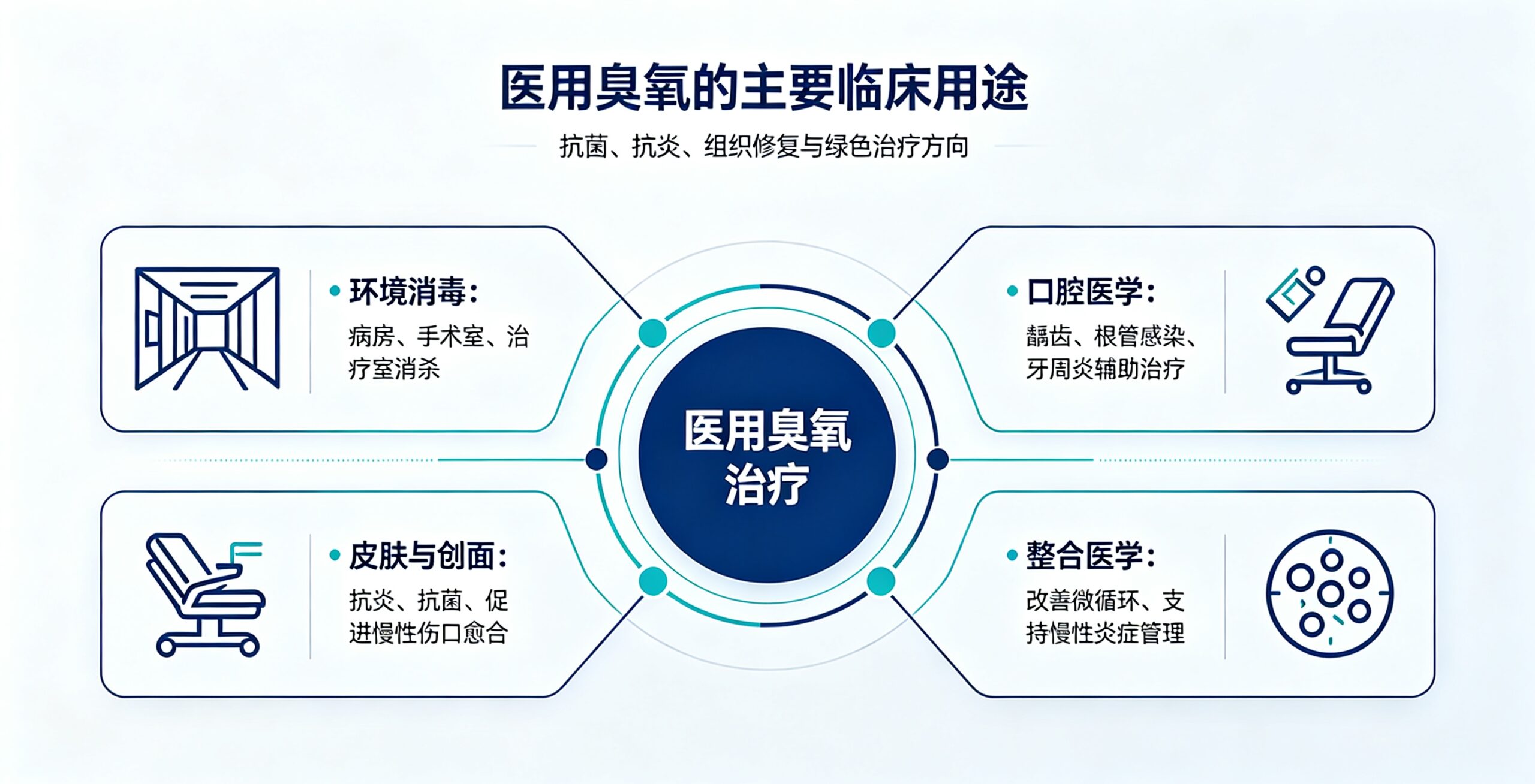
Due to the effectiveness of its sterilizing abilities, anti-inflammatory properties, antioxidant characteristics and tissue repair promotion, the medical ozone generated by specialized equipment has found its application in many areas of medicine.
3.1 Medical Environment Disinfection
Gaseous ozone is effective in killing bacteria, fungi, viruses and other pathogenic agents in hospital wards, operating rooms and treatment rooms. Moreover, it has the angle-free disinfection and its final products after disappearance is oxygen without chemicals left behind. It is employed for routine treatment of hospital environments with the aim of minimizing the rate of hospital-acquired infections.
3.2 Dental and Oral Medicine
In conservative and endodontic dentistry ozone is used as an adjunct treatment for dental caries, root canal infection and periodontitis. It enables the rapid destruction of pathological bacteria and results in inflammation exudation reduction and damaged tissue restoration with minimum trauma and quick recovery.
3.3 Skin and Wound Treatment
Ozone is applied topically for the inhibition of skin inflammation, destruction of the superficial pathogens and acceleration chronic wound healing.
It has been recognized as a method for treating stubborn skin conditions as well as for repairing traumatic injuries all over the world.
3.4 Integrative and Regenerative Medicine
Medical ozone therapy means delivering standardized ozone-oxygen mixed gas by using proper clinical treatment methods to influence human oxidative stasis, improve microcirculation, and treat chronic inflammatory conditions, properly classified among green regenerative medicine technologies. - Safety in Use and Operational Rules
Despite the high clinical importance of ozone in medicine, using ozone in improper amounts or incorrect way puts at risk the safety of patients. Thus, the following basic operational rules must be met:
- Professional use: Medical ozone generating devices must be used by qualified medical specialists only Non-professionals must not adjust ozone concentration and parameters thereby preventing ozone excess emission.
- Proper concentration control: Only the correct ozone concentration is appropriate in each clinical application. The excessive concentration may harm mucous membranes of a human being and disturb oxidative equilibrium.
- Ventilation compliance: There should be a presence of good ventilation in the room where ozone is being applied. It is necessary to exploit the built-in ozone decomposing system to prevent ozone from being ventilated out for a long period of time.
- Regular calibration: Conducting routine calibration of ozone concentration and flow rate is necessary to ensure the quality of emitted ozone.
- Difference Between Medical and Non-medical Gas Generators
A lot of people confuse the uses of ozone equipment but there are significant differences between various types of ozone-generating equipment:
- The type of the gas used: Medical models use 99.5% pure medical oxygen while industrial and home models use regular air.
- The level of concentration stability: Medical devices achieve precise real-time calibration of ozone; usually, the concentration varies and has a huge margin of error.
- Safety procedures: Medical devices are equipped with the ozone decomposing system as well as sanitary systems; home ozone equipment does not have any special sanitation safety features.
- Application: Ozone generating equipment is used only for the medical therapy of humans; it is not applicable for other cases of decontamination.
- Future Perspective
The development of ozone therapy keeps on changing and improving due to the acceleration of green medicine advancement. Numerous advantages such as compactness, intelligence, and safety of devices are being developed thanks to the progress of modern innovations.