

A Review on Ultraviolet Blood Irradiation Therapy: Efficacy, Risks and Clinical Practice

Ultraviolet Blood Irradiation (UBI): Mechanisms, Advantages, Risks and Applications
Ultraviolet Blood Irradiation (UBI), otherwise known as ultraviolet blood irradiation therapy or biophotonic blood therapy, is a non-invasive, light-based therapy that is over a century old. UBI is used extensively in integrative medicine, immunomodulation, and as an adjunctive treatment and constitutes a phototherapy that employs specific ultraviolet frequencies of light on extracorporeal blood to trigger photochemical processes and physiological responses that work against pathogens, regulate immune response functions, facilitate blood circulation, and reduce inflammatory processes. Now that UBI is regarded as a relatively safe and effective physical therapy, it has become more and more popular in modern preventive practices and for the treatment of chronic illnesses.
- UBI Therapy: An Overview
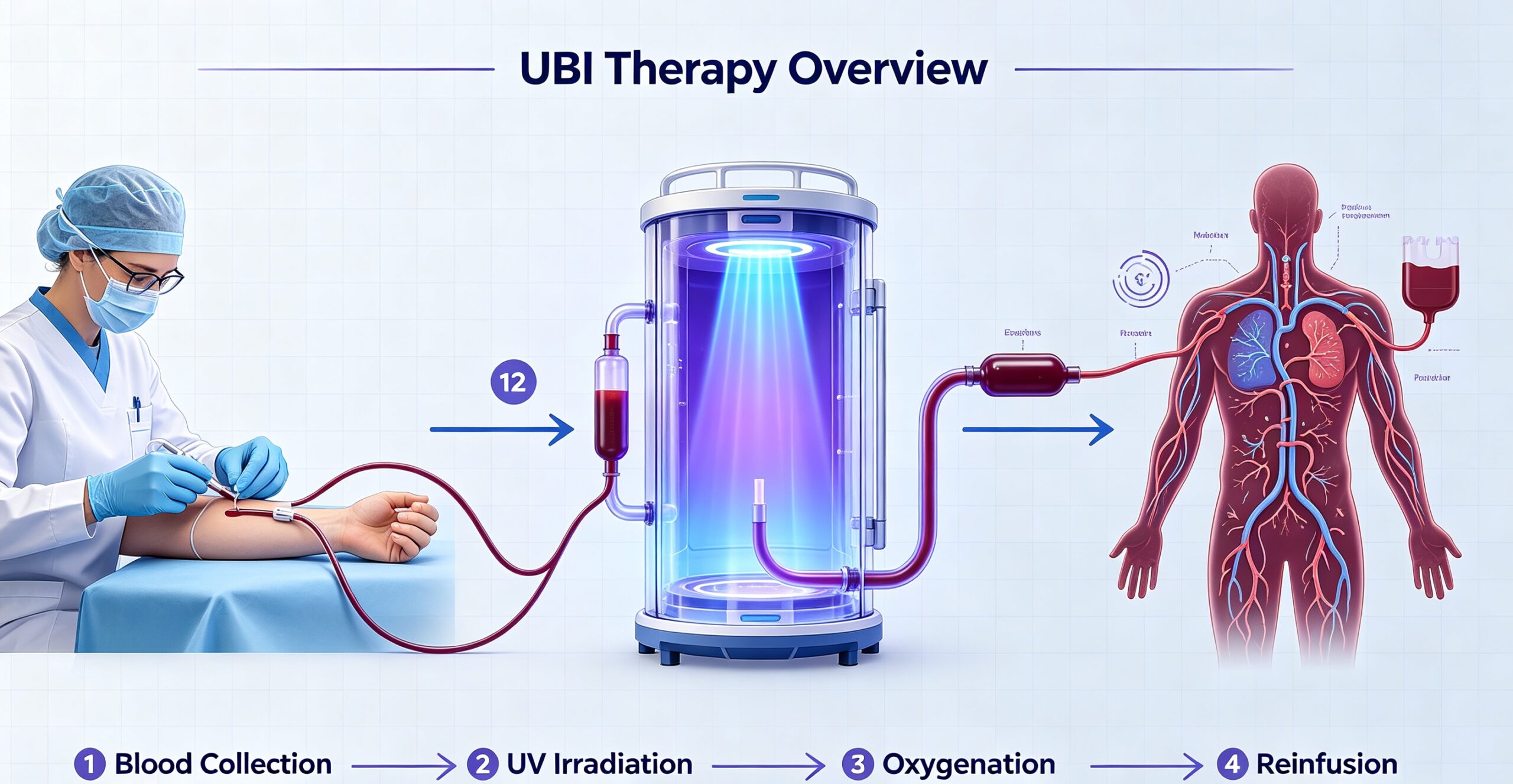
UBI is an extracorporeal phototherapy process that stands apart from conventional ultraviolet skin irradiation treatment. The procedure is performed by taking a small amount of venous blood from the patient, exposing it to UV radiation of a preselected dose and a preselected wave length of light (UVA315 to 400nm and UVC254 nm) in a closed sterile apparatus, and returning the treated blood into the body. Due to the closed-loop approach employed in some forms of UBI therapy, no damage from ultraviolet radiation occurs on the patient’s skin, since the process relies on blood circulation.Scientific Mechanisms
The benefits of UBI are based on various synergistic photochemical and biological processes that were established by medical science in four main functional modes.
2.1 Elimination of Microorganisms and Blood Cleansing
Certain ultraviolet light rays can damage the nucleic acids of bacteria, viruses, fungi, and other microorganisms found in the blood, preventing their reproduction and functioning and leading to non-drug disinfection. Additionally, the application of ultraviolet light results in breaking down metabolic toxins, inflammatory waste, and oxidative products, which lowers blood viscosity and cleanses the blood vessels.
2.2 Enhancement of Blood Oxygenation and Microcirculation
Photoregulation with ultraviolet light improves the shape of red blood cells, makes their shape deformable, and increases the blood saturation with oxygen and delivery of oxygen to the organs and tissues. Moreover, it dilates small blood vessels and improves the blood circulation system, thus eliminating microcirculation disorders caused by hypoxia and ischemia.
2.3 Normalization of Immune System Functions
The blood infused with ultraviolet light can enhance the work of phagocytes and ensure better phagocytosis and clear the entire system as well. That is how UBI helps to inhibit chronic enough inflammation and decreases the production of the body’s inflammatory markers.
2.4 Activation of Antioxidant Mechanisms
Controlled application of ultraviolet light allows obtaining some reactive oxygen species (ROS) that activate the action of dismutase generation (SOD) and other enzymes responsible for antioxidant activity, so this technology helps to reduce oxidative stress and protect the cells of the vascular endothelium.Standard Procedure for UBI Treatment
Modern clinical UBI therapies employ standardized aseptic protocols that are both safe and easy to carry out and can be completed within 30 to 60 minutes and without visible discomfort or trauma:
Step 1: Venous Blood Collection – 50–200ml of the patient’s blood is collected through a sterile closed intravenous pipeline, with the quantity being adjusted based on the person’s age, weight, and condition.
Step 2: UV Accurate Irradiation – The blood enters a specialized phototherapy device to be subjected to a set dose of ultraviolet radiation (0.6-1.2 J/cm²), thus undergoing the process of photochemical reaction and blood activation.
Step 3: Oxygenation and Activation – Most current medical cases provide for simultaneous oxygenation or use of low concentration ozone treatment to provide additional activation of blood.
Step 4: Blood Reinfusion – The processed activated blood gets back into the patient’s body, thus spreading its effect across the body through general circulation.
Verified Healthcare Advantages of UBI Treatment
Having completed over one hundred years of reliable testing and continuous improvement of the respective technology, UBI has developed well-functioning application systems in a variety of areas, including solutions to the following considerable issues:
4.1 Supportive Treatment of Infections
Due to positive effects on the treatment of acute and chronic infections, it alleviates infection symptoms, shortens the disease duration and reduces the use of antibiotics and antiviral medicines. It is beneficial in the case of frequent respiratory infections, chronic UTIs and viral colds.
4.2 Improvement of Cardiovascular and Cerebrovascular Health
The use of UBI helps to control blood lipids, prevent thrombus formation, enhance blood flow, and in regulating hypertensive situations.
4.3 Control of Chronic Inflammation and Autoimmunological Disorders
UBI is effective in the treatment of diseases linked to chronic low-grade inflammation. It alleviates the symptoms caused by diseases like arthritis, asthma, eczema and others being an effective means.
4.4 Metabolic Improvement and Rejuvenation
UBI was proven effective in the combination treatment of diabetes mellitus. It enhances tissue oxygenation, reduces oxidative stress.
4.5 Application after Surgery and Physical Rehabilitation
Applying this technique has resulted in a significant decline in post-surgery inflammation, along with the prevention of complications that can develop after surgeries, assisting in blood circulation, and helping tissues repair faster which leads to quicker recovery after surgical procedures or injuries. - Safety Profile, Contraindications and Therapy Notes
5.1 Safety Profile
UBI falls into the category of low-risk physical and green therapy methods. The actual closed and sterile procedure prevents any cross-contamination, while the controlled doses of UV rays do not harm the tissues as well as blood. Regularly performed clinical procedures do not cause any serious side-effects except for the cases when patients may experience dizziness or fatigue in the short term which usually disappears soon after resting.
5.2 Absolute and Relative Contraindications
In order to ensure treatment safety, UBI cannot be used for the patients that are allergic to UV light or have certain medical conditions which do not allow them to undergo this therapy. Also, women who are pregnant or breastfeeding cannot undergo this type of therapy either. All patients that have chronic illnesses must be evaluated by a physician before undergoing this therapy.
5.3 Principles of the Use
UBI is mainly used as an adjuvant therapy type which cannot be substituted for medications or surgical treatments in case of severe illnesses. The most common application of UBI includes health support, chronic illnesses rehabilitative procedures, and immune system stimulation. - Current State of Affairs and Perspectives
UBI appeared in the 1920s when it was first used to treat infectious diseases and has been continuously improved ever since. Nowadays, it is successfully utilized in a lot of integrative medicine clinics in Europe and the USA, and many variations of the therapy appeared (for example, UV ozonized therapy or UV filtration therapy).
UBI is considered to have potential for its application in preventive medicine and regenerative medicine in the future.