

Understanding Ozone IV Therapy: Functions and Clinical Protocols

Ozone IV Therapy – An Overview
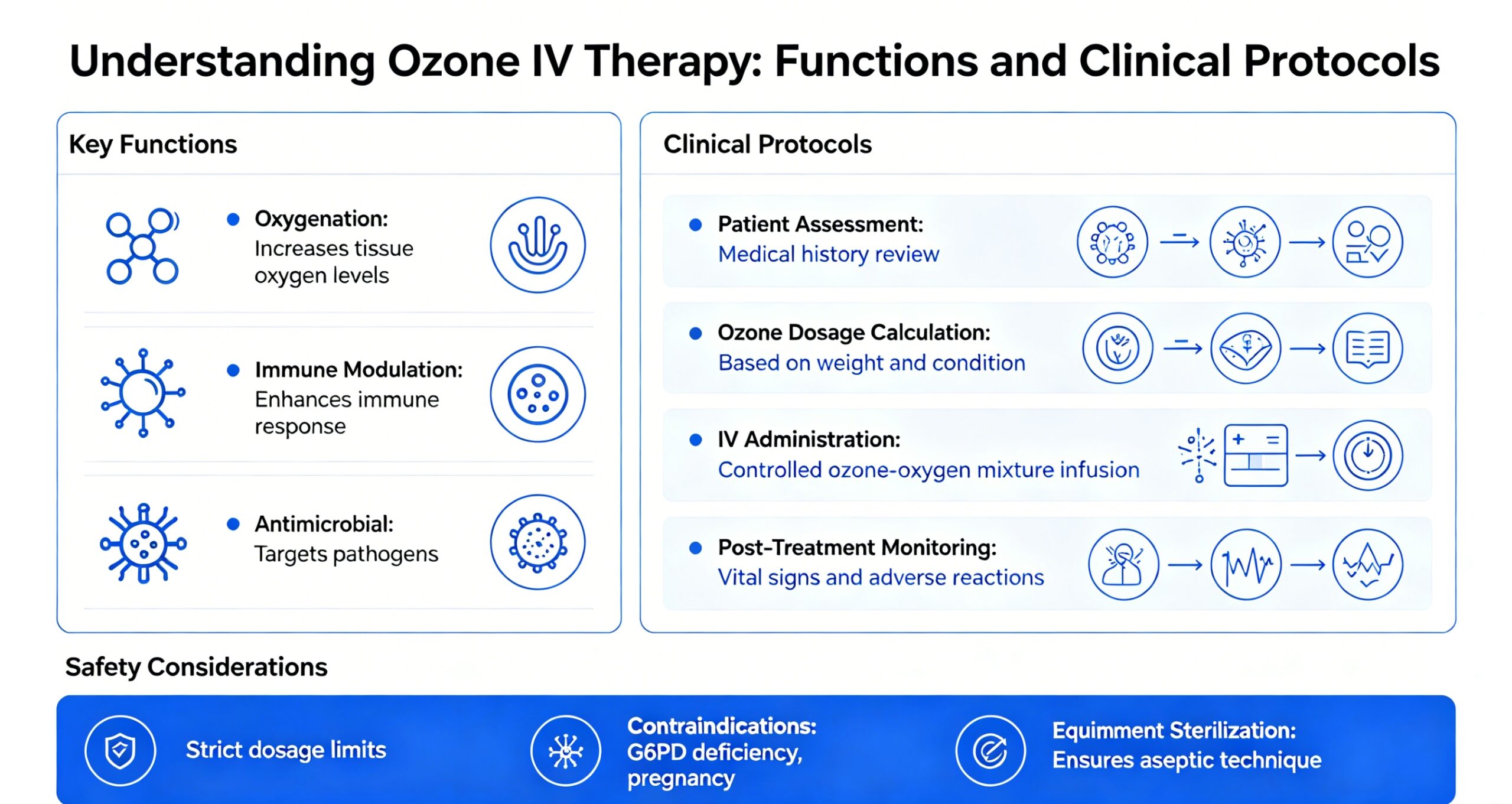
Ozone IV Therapy is one of the newest therapeutic techniques available for patients today. Ozone is injected into your bloodstream using an intravenous catheter at a very high level of purity, allowing for increased oxygenation at the cellular level and the ability to enhance immune function and provide a significant number of antimicrobial properties used to treat chronic inflammation, viral pathogens, metabolic disorders, and pre-disease conditions (also known as sub-optimum health).
This article provides an overview of ozone therapy via IV with regards to the mechanisms of ozone actions; clinical purposes for ozone therapy; standard protocols used for ozone IV Therapy; guidelines for the administration of ozone IV Therapy; and documentation of clinical proof that demonstrates effectiveness of ozone therapy by the medical community.
Ozone therapy via IV has one standard application (Major Autohemotherapy – MAH). In MAH, a specific volume of blood is withdrawn from the patient, a predetermined quantity of ozone gas from an FDA manufactured ozone generator is combined with this blood, and the resulting mixture is returned to the patient’s body via injection.
Oxygen in the body is used via inhalation as diatomic (O2) oxygen; therefore, when ozone (O3) is introduced into the body, it produces an entirely different biochemical reaction in the body due to the fact there are three atoms of oxygen within the chemical structure of ozone producing multiple key physiologic effects.
Therapeutic Effects of Ozone IV Therapy
Antioxidant Functionality and Modulation of Oxidative Stress
The introduction of low concentrations or volume of ozone into the body through ozone IV Therapy initiates a temporary mild oxidative stress thereby stimulating the Nrf2 pathway (an antioxidant pathway) resulting in the release of a large number of endogenous antioxidant enzymes (i.e., superoxide dismutase and glutathione) in addition to assisting in the removal of large amounts of excess ROS from the body and assisting in re-establishing the balance between oxidants and antioxidants and ultimately allowing the body to recover from long-term oxidative damage secondary to chronic inflammation and/or a metabolic disorder.
Antimicrobial Effects of Ozone
The strong oxidizing capability of ozone is the reason ozone can be used effectively against a large variety of types of lipid-enveloped microbial pathogens (i.e., Influenza Virus, Herpes Simplex Virus, etc) by destroying the lipid envelope of a variety of viral pathogens as well as preventing and/or destroying the ability of these various viral pathogens to reproduce. The strong oxidizing capabilities of ozone also enable ozone to penetrate through the cell envelope of bacterial and fungal pathogens; therefore, ozone disrupts the metabolic function of the respective bacteria and fungi and gains entry into these organisms via both bacteriostatic and bacteriocidal pathways. Additionally, unlike the majority of antibiotics, ozone induces no antibiotic resistance against the various pathogenic microorganisms.