

A Systematic Review of Updated Progress, Clinical Application and Safety Standardization of Contemporary Blood Therapy Technology

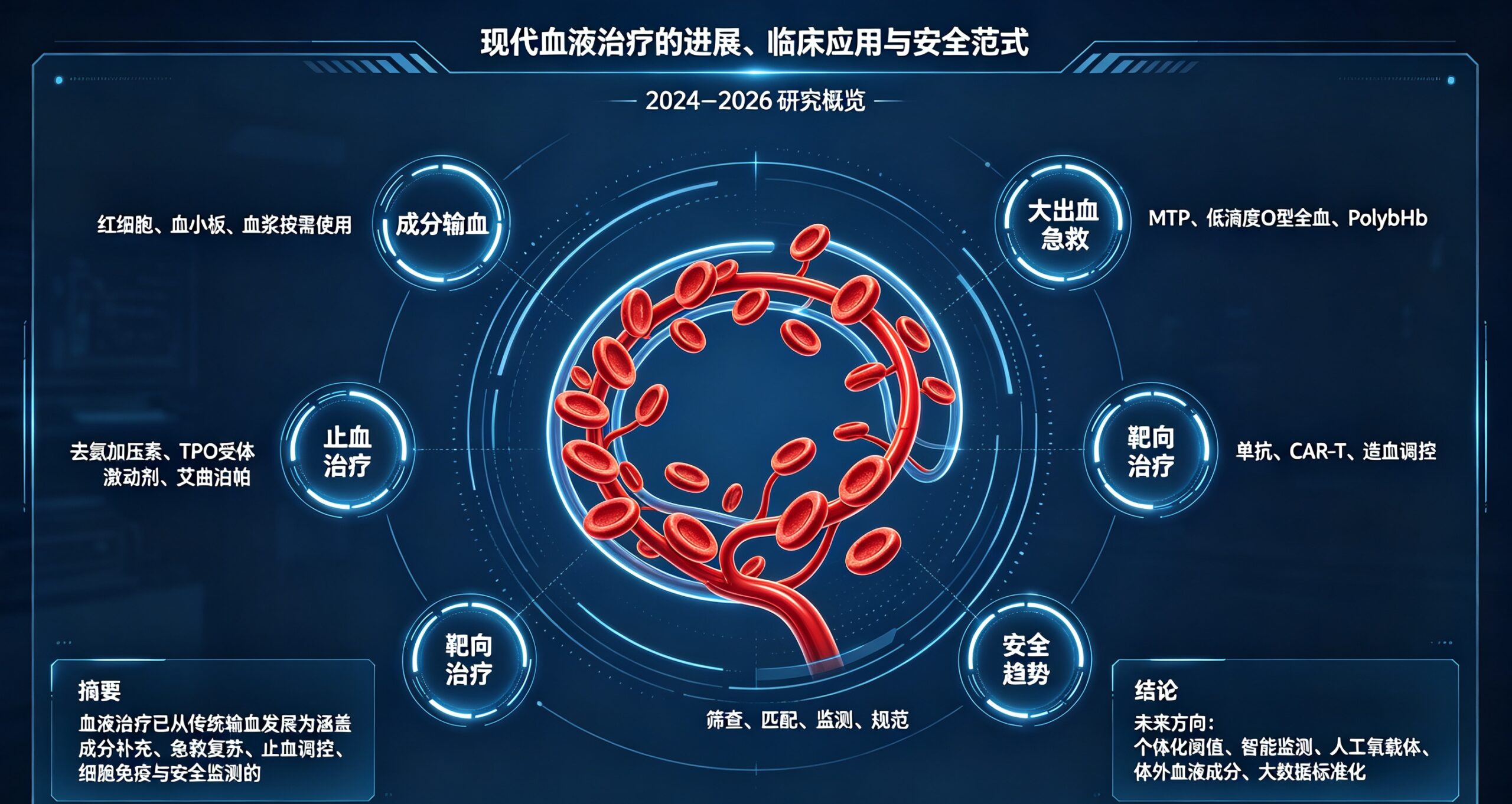
Advancements, Clinical Applications, and Safety Paradigms of Modern Blood Therapy: A Systematic Review
Abstract
Blood therapy is based on a number of evidence-based clinical strategies that provide the possibility of treating different blood disorders, trauma-causing hemorrhagic shock, dysfunctions of vital organs, and immune disorders related to blood, in line with transfusion medicine and hematology. The achievements in the treatment method development and the emergence of latest biomaterials and means of precise monitoring enabled the transformation of traditional blood transfusion techniques into an effective mean of broadening the range of available services with the possibility of components blood transfusion, the use of hemoglobin based oxygen carriers, targeted biotherapy in hematology, and hemostasis. In this regard, this article gives an overview of the latest tendencies identified in the field of blood therapy techniques from 2024 to 2026, demonstrating the existing discussions on the transfusion threshold, issues with standardizing different procedures, possible threats linked to blood transfusion techniques applied to the treatment of patients, who lost considerable amount of blood, and future directions for further improvement within the frameworkIntroduction
Blood therapy is a term that encompasses all medical treatments that are meant for regulating blood components and restoring lost capability to transport oxygen, dealing with coagulopathy, and improving blood production processes. Blood therapy has already become an important emergency and continuous therapy practice in modern medicine, covering wide range of applications such as critical injuries, critically ill surgical patients, and treatment of malignant blood diseases and disturbances in blood production caused by chemotherapy as well as congenital blood disorders in patients. It should be noted that within the last decennial period blood transfusion technology has undergone serious changes due to recommendations of AABB and numerous multicenter studies.
Blood transfusion has always been used in transfusion technologies of blood collected from other humans. Moreover, due to such problems of blood therapy as lack of blood, emergency blood therapy problems, and differences between blood groups, there arose a necessity of promoting new technologies for blood therapy. The developments such as hemoglobin polymerization, novel treatment practices such as hemostatic factor use have appeared in the modern world which has made blood therapy much more efficient.Modern blood therapy methods can be subdivided into four categories, which follow specific requirements and techniques: blood component transfusion, emergency treatment, hemostatic treatment, and alternative blood products. The procedures have undergone several clinical studies, which led to standardizing practical applications in clinical practice.
2.1 Component Blood Therapy
Component transfusion has been the most commonly used method among all blood therapy types, as it allows compensating for blood component losses according to the patients’ blood pathology and preventing poor utilization of foreign blood. The most frequently used types include RBC transfusion among anemia and hypoxemia patients, platelets among those suffering from thrombocytopenia and bleeding, and plasma among patients with coagulation factor deficiency.
Currently, researchers in the field concentrate on the improvement of the transfusion threshold. According to the study conducted by the AABB in 2024, it was revealed that in cases of patients with acute brain injury, it is better to use a liberal transfusion strategy with hemoglobin threshold of 9 g/dL rather than to use the restrictive strategy practiced with the threshold of 7 g/dL. This is in contradiction with common practice in the area of transfusion threshold parameters.Although the hemoglobin transfusion thresholds for ECMO patients remain controversial, there is consensus that these thresholds should vary depending on blood circulation and oxygen usage within a specific patient’s body.
2.2 Emergency treatment of huge blood transfusions
The approach called massive blood transfusion therapy plays a crucial role in treatment of patients suffering from acute bleeding due to trauma, surgical intervention, and obstetric bleeding.
Standardized Massive Transfusion Protocols (MTPs) gained popularity in the world’s leading trauma hospitals and includes important issues like the parameters for initiating transfusions, blood components mixing ratios, and criteria for stopping transfusion. Studies show that many large hospitals use balanced transfusion therapy, although there are still many disparities in MTPs activation criteria, blood products usage efficiency, and the duration of the pre-stored blood components. In many cases, blood plasma that has been thawed as well as low-titer O whole blood (LTOWB) are not available at hospitals, which leads to delayed care for patients suffering from severe hemorrhagic shock. As far as evaluating treatment efficiency is concerned, the use of PolybHb (polymerized bovine hemoglobin) in bloodstream plays a similar role as using fresh whole blood in terms of cardiac function recovery and oxygen delivery.Hematopoietic regulatory therapy is different from transfusion in that it is intended to stimulate body’s hematopoietic function and blood coagulation, which implies that this technique is good for both chronic hematopoietic dysfunction and insignificant bleeding disorders. Desmopressin hemostatic therapy, thrombopoietin (TPO) receptor agonist therapy.
Desmopressin is a well-known drug in the hemostatic therapy field, being used in the treatment of patients suffering from mild hemophilia A and von hemophilia B. According to various clinical studies, intranasal desmopressin has the efficacy level of 95% in treating acute bleeding episodes and 93% in prophylactic hemostasis which helps the number of platelets transfusions to be reduced.
Concerning patients suffering from chemotherapy-related thrombocytopenia in malignant tumors, TPO receptor agonists (avatrombopag) can increase the number of platelets and decrease bleeding risk and the necessity to undergo more than one allogeneic transfusion cheaper and safer than by means of cheap platelet transfusion only.
As for the treatment of aplastic anemia, eltrombopag in combination with cyclosporine A is used as the first-line therapy. According to a phase III multicenter trial held in 2023, the total response rate among moderate aplastic anemia patients treated by this drug combination has accounted for 71.4%, which is definitely better than the response rate achieved in the treatment with immunosuppressive drugs only, meaning this type of therapy can help to facilitate hematopoietic recovery process.Innovative Blood Targeting Therapy
With the recent innovations made in the field of immunotherapy and cell therapy, a great deal of advanced blood therapies have been developed immensely for the treatment of difficult hematological conditions. An example of this would be the usage of monoclonal antibodies for patients who have aplastic anemia and have developed resistance against platelet transfusion that will improve the efficacy of this therapy in these patients with more chances for achieving partial recovery of bone marrow hematopoiesis.
As for blood therapy in leukemia, CAR-T blood therapy has resulted in astonishing outcomes in terms of long-term remissions. If we talk about the CAR-T therapy for newly diagnosed patients with Ph+ B-ALL, this therapy is able to ensure long-time remission and make recovery without a need for intensive chemotherapy.
Core Problems.
The major issue related to blood therapy is the need to individualize transfusion schedule. For highly complicated cases with patients having organ dysfunctions such as patients with ECMO and acute brain damage there is still not sufficient account of differences existing in liberal andIn addition, the adoption of treatment recommendations concerning large-scale transfusions varies from one institution to another, which is the reason why different blood products and methods are used in terms of treatment efficiency. Modern safety management systems focus on a complex of safety standardized management processes, the first of which is forming the proper transfusion indication screening system in order to prevent unnecessary transfusion; the second is matching the blood products and conducting the necessary tests before transfusion in order to eliminate immune adverse reactions; and the third is development of a multiparameter monitoring model for blood treatment, taking into account heart rate, blood oxygen level, and blood flow.
As for the modern techniques of targeted blood therapy and cellular therapy, continuous follow-up screening of patients concerning the effectiveness of the treatment is necessary to prevent conflicts with irrelevant targets and side effects of treatment and to ensure the possibility to apply treatment in clinical practice.
Future Development Trends in Blood Therapy.
Development in blood therapy aims at achieving precision, intelligence, and minimum invasiveness. The first principle means that individualized targeted treatment will substitute for other empirical therapies.The second provision involves the use of alternative technologies in blood therapy which means using artificial oxygen carriers and blood components grown in vitro as technologies for dealing with problems with the restricted availability of donated blood and minimization of the risks of transfusion infections. The efficient use of blood therapy management finally depends on the application of big medical data and the standardization of protocols in medical organization to elaborate clinical diagnosis and treatment procedures in blood therapy.
5. CONCLUSIONS
The present usage of blood therapy represents the transformation of blood transfusion into a complex process connected with emergency resuscitation, treatment of chronic diseases, and solutions of complicated diseases. The application of new clinical trials and standards consistently improves the efficacy and safety of blood therapy; however, problems are still present, for example, absence of unified protocols and problems with defining individual thresholds. Nevertheless, as a result of the implementation of precision medicine, biomaterials technologization, and cellular immunotherapy, blood therapy application will become more precise, safe, and effective in the context of overall clinical use of blood therapy and will give the possibility to fight against serious cases of complicated diseases in hematology.
References
Park JH, et al. Towards the Standardization of the Massive transfusion Protocols: A multi-center assessment of the differences in practices in the national trauma system. PMC, 2026.
[2] Association for the Advancement of Blood and Biotherapies. Current advances: A critical review of selected topics from the recent progress made since 2024.
[3] Resuscitation of hemorrhagic shock with fresh blood supply as well as old blood along with polymerized hemoglobin. PMC, 2025.
Shi J, et al. New approach to the treatment of aplastic anemia with refractoriness to platelet transfusion. Chinese Journal of Hematology, 2025.
Crossing the boundary: blood transfusion limits when ECMO is involved. PMC, 2026.
Desmopressin being a hemostatic agent and a blood sparing remedy for bleeding ailments. PMC, 2026.
Research into TPO receptor agonists effectiveness when dealing with chemotherapy-induced thrombocytopenia. PMC, 2027.
Single CAR-t transfusion during front-line consolidation for adult ALL. Blood, 2026.
Eltrombopag plus cyclosporine A as a remedy for moderate aplastic anemia: stage 3 experiment. Blood, 2026.
The Model for the Development of the Safety Thresholds in Bloodletting Therapy. BJSTR, 2026.