

Mechanisms and Clinical Practice of Medical Ozone Therapy: Safety Specifications and Emerging Research Progress

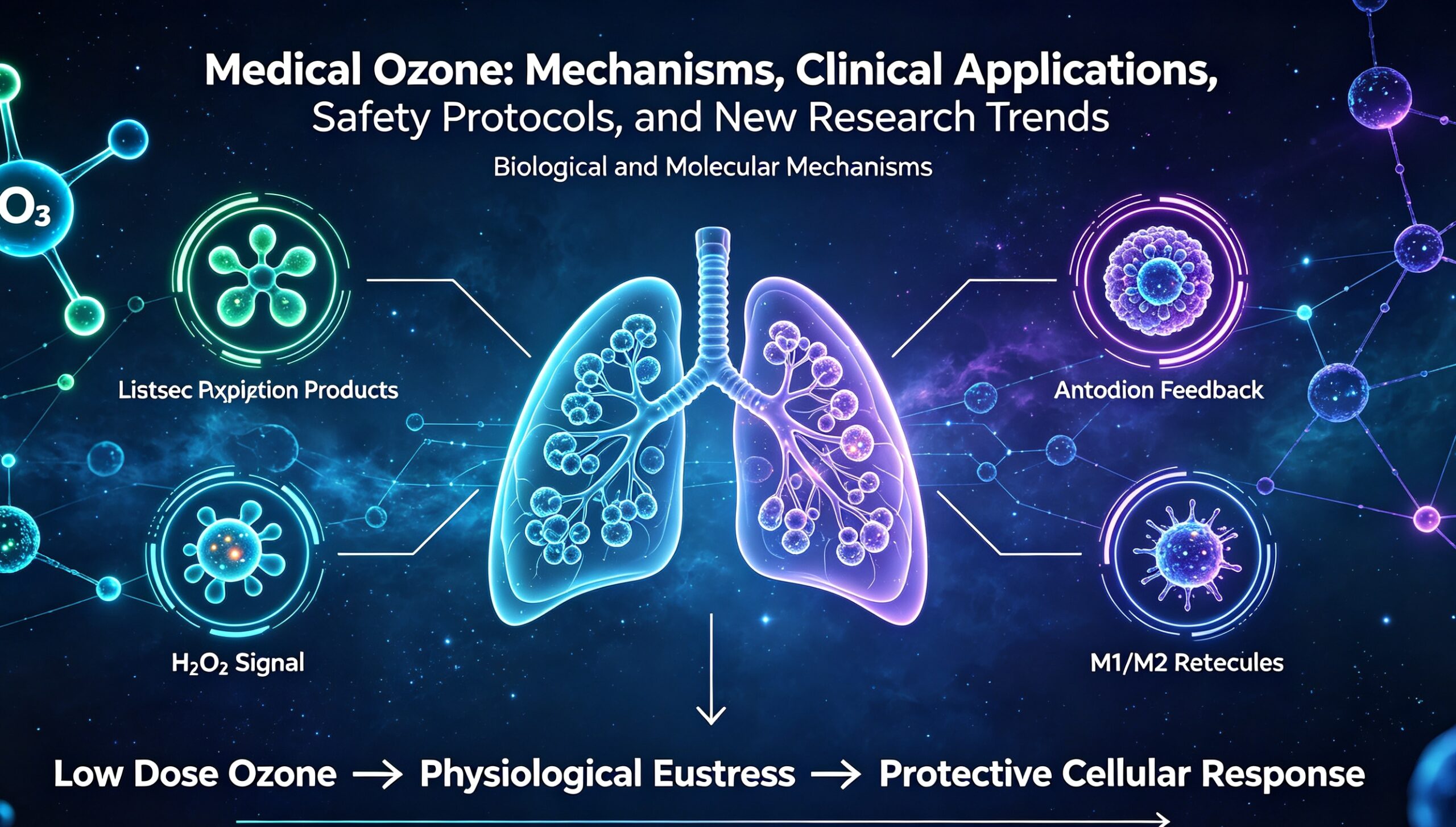
Medical Ozone: Mechanisms, Clinical Applications, Safety Protocols, and New Research Trends
Contemporary medicine recognizes medical ozone (O₃) therapy as an additional and complementary method of therapy, with special biochemical, anti-inflammatory, antimicrobial, and tissue regeneration mechanisms. There is a difference between medical ozone and toxic ozone known as environmental ozone. Medical ozone is produced according to the pharmaceutical regulations ensuring the precise concentration and dosage of medical ozone. The process acts under the biological principle of damaging living organisms rather than chemical (hence biological eustress). The paper provides relevant information about the biological principles of medical ozone working, the most important applications of the method, the safety protocols of treatment with the medical ozone method, and the problems within the field together with possible solutions. Again, based on the information obtained from modern studies conducted after 2020 so far the paper aims to provide some recommendations for effective use of the method.
- Medical Yahtzee
Medical ozone is a combination of ozone and pure oxygen which does not have harmful elements such as nitrogen oxides and any other impurities. Ozone is known to be reactive oxygen species (ROS); thus it has the necessary properties to be used as anThe use of medical ozone therapy is expanding rapidly in Europe, where several studies have shown that the treatment has an effect on redox balance in the human body, stimulates the creation of endogenous antioxidants, prevents excessive inflammatory responses, and eliminates pathogenic agents. Although oxygen stress is harmful to cells at high dosage, low dose ozone therapy allows to induce the condition of physiological eustress and protective reaction of cells. Medical ozone is becoming popular but is considered controversial in the West due to the quality of studies and lack of large-scale double blind controlled clinical trials which are necessary for the application and confirmation of mechanism action. - Biological and Molecular Mechanisms behind the Medical Ozone Effect
The effect of medical ozone consists of a chain of biochemical processes taking place between the biological tissues and body fluids and ozone. The main mechanisms are redox status regulation, immune properties of ozone, and its antibacterial activity.
2.1 Redox Status Regulation in the Body and Stimulation of Endogenous Antioxidants
The interaction between the ozone and polyunsaturated fatty acids (PUFA) begins immediately after ozone comes into the body with the help of autohaemotherapy, local application of ozone to the skin, or insufflating it through the rectum or vagina, if required.The reaction leads to the production of compounds called lipid ozonation products along with tiny amounts of H2O2. The unique property of therapeutic ozone, compared to the toxic ozone, is due to the mechanism that allows low concentration short contact to stimulate the antioxidant protective feedback mechanism while high dose and prolonged exposure generates irretrievable cell and tissue oxidative damage. Studies show that ozonotherapy performing as a standard treatment method results in significant diminishing of oxidative stress levels in patients with chronic inflammation, metabolic diseases, or after traumas.
2.2. Effects Against Inflammation and Boosting of Immunity
Medical ozone possesses a double-edged effect on the immune system by lowering the excessive pro-inflammatory reactions and stimulating the immunity where it is weak. In this way, the agent inhibits the secretion of pro-inflammatory cytokines such as TNF-alpha, IL-6, and IL-1beta which helps decrease the local and systemic inflammation. Simultaneously, ozone helps enhance the performance of T-lymphocytes, B-lymphocytes, and NK-cells, thus strengthening both the specific and non-specific immunity and solving the access issues of immunity.Ozone treatment can effectively stop the chronic inflammatory processes that are still active after an acute infection, alleviate the inflammation processes in any organs or tissues, and thus make this state advantageous for healing of tissues and building up the immune system activity. Ozone treatment has shown that this method is able to regulate the process of macrophage differentiation, converting pro-inflammatory M1 macrophages into anti-inflammatory M2 macrophages, which accelerates the healing process in the focus of inflammation.
2.3 Broad Spectrum of Action
Medical ozone has a strong global effect on bacteria, fungi, and bacteria. This strong oxidizer is capable of destroying the cell walls and membranes of pathogens and deactivating their enzymes and genetic materials and prevents the reproduction of harmful microorganisms. Ozone has no disadvantage of leading to the resistant strains of bacteria or viruses unlike the antibiotics and anti-infective medicines, thus it is able to destroy both resistant strains of microorganisms and opportunistic infections.
Additionally, ozone treatment can deactivate the protein and nucleic acids of the virus and destroy virions while keeping a part of the immunogenicity of viruses, which helps speed up the infection process. Many clinical studies testify about the efficiency of this method to treat viral diseases and viruses affecting the respiratory tract and skin.
3. Application of Ozone Therapy
Medical ozone application has strict protocols for its curing. Ozone therapy can be used immediately for some diseases or it can be applied later during the recovery process.
3.1. Ozone in the Area of Pulmonology
The combination of autohemotherapy (O₃-MAH) and inhalation therapy can be effectively used for providing ozone treatment to patients with acute and chronic diseases of their respiratory system. The info about clinical trials proves that applying ozone therapy with medication treatment patients have better results in terms of DLCO and walking distance increased in post-acute COVID patients.
Additional application of ozone shows good results in terms of alleviating such symptoms as chronic fatigue, anxiety, and depression experienced by the patients after COVID treatment results. Evaluation of clinical information shows that after several ozonation autohemotherapy sessions the patients have significant improvements in terms of their anxiety and depression evaluation.
3.2. Ozone in Dermatology
Medical ozone is widely known in the area of dermatology for applying ozone oil or gas for various local procedures. Ozone can be used to cure skin reaction to medicines, chronic wounds, mycoses, and eczema.