

Clinical Value and Standardized Application of Medical Ozone Generators

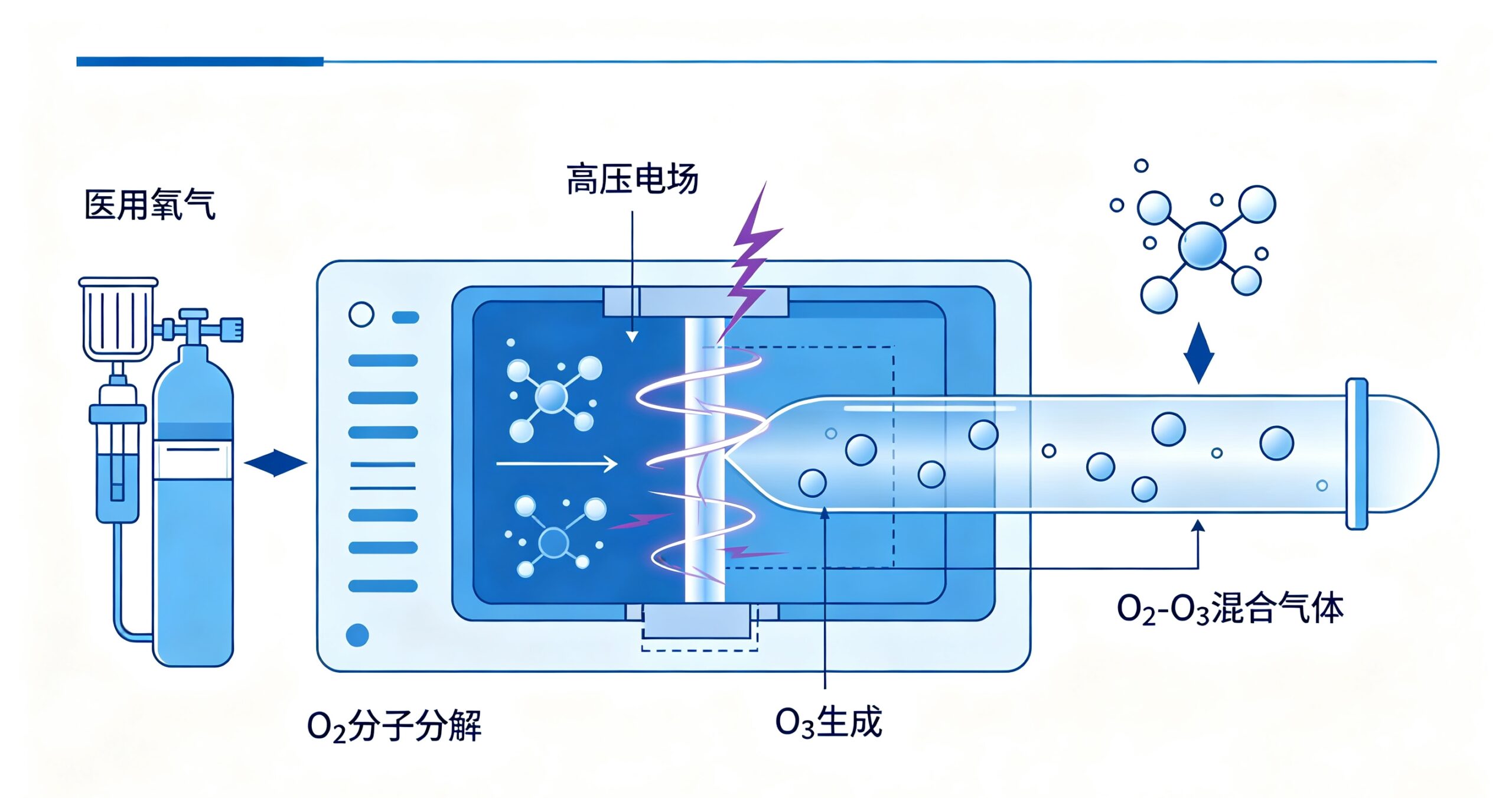
Medical Ozone Generator: Systematic Understanding of Structure, Function and Clinical Practices
As one of the most important instruments used in ozone treatment, the medical ozone generator has been primarily designed in order to regulate the most effective and reasonably safe process for obtaining various types of ozone-based medical gases. Unlike other ozone engineering systems that use air as the basis for ozone manufacturing, the medical generator employs the use of proper gas quality as the foundation, that makes it possible for the generator to control the ozone content within the produced gas. Thus, the medical ozone generator is one of the key means of ensuring the efficiency of clinical ozone therapy.
II. Core Principles of Operation of Medical Ozone Generators
The operation of medical ozone generators is based on the principles of dielectric barrier discharge, which is considered to be the most reliable method of ozone generation in practice. The application of the DBD method completely eliminates the potential drawbacks the use of ultraviolet radiation in the ozone generation process might contain. The entire ozone generation process includes several stages which will be described below in detail.The process of ozone generation through the influence of high-voltage electric field involves the breaking down of oxygen molecules into atomic oxygen, which combines with already existing oxygen molecules to produce a mixture gas of ozone and oxygen, i.e. O₂-O₃ gas. Further, the concentration and output of the ozone gas mixture are parameterized by three essential aspects, which are; voltage output of the machine, rate of flow of medical oxygen gas, and the space between the electrodes.
In addition to being able to produce ozone gas mixture with accurate concentration, medical ozone generators are also able to control its concentration according to the requirements of medical application, thus eliminating the risk of causing excess oxidation or insufficient ozone concentration for therapy. Another aspect that differentiates medical ozone generators from ordinary ozone generation machines is the short lifespan of ozone gas, which means that the ozone gas mixture would not remain for long, thus preventing any probable environmental pollution or toxic effect on human beings.
- Structural Design and Other Technical Features of Medical Ozone Generation Equipment
Medical ozone generators are manufactured based on modular construction system, and have five basic components, which include; an oxygen gas supplying module, high-voltage ozone generation module, ozone concentration measurement module, ozone delivery module, and safety measures module. The first part of every ozone generator should work in adherence to strict medical standards, so as to be in a position to comply with all the requirements involved in the use of medical devices for treatment.The device for performing high-voltage discharge has been invented based on the use of high-precision insulating electrodes having the certain features of stable discharge quality, low energy loss, and durability, allowing the production of uniform ozone gas. The integrated intelligent monitoring system is the main technical feature of the device that allows measuring ozone concentration and flow rate in real-time as it allows to set required concentration parameters for treatment avoiding the output of too high concentrations of the gas.
The ozone generator has some main clinical peculiarities making it functional. Thus, on the one hand, there exists a possibility of operating in different gas production modes usage of gases in the process of autohemotherapy and local methods of its application such as vaginal insufflation. Even the portable ozone generators appear to be more frequently used nowadays in the clinical practice. - Clinical Application of Ozone Generators
Ozone generators are used in the clinics with the help of the gas mixture obtained due to using ozone generators. The effectivenessWhen ozone is mixed with the blood of a patient in vitro, it activates the antioxidant system of the body, promotes blood cell metabolism and microcirculation, and assists in the improvement of sub-health status, chronic inflammatory diseases, and low immune function.
The precise low-to-medium concentration ozone output from generators exhibits outstanding bactericidal and reparative capabilities for local anti-infection and wound healing. Ozone breaks down and destroys various microorganisms’ cell membranes and nucleic acid structures: this provides a broad field of application for the disinfection and healing of problems of unfriendly wounds, ulcerative lesions, and fungal skin infections. The device provides stable therapeutic ozone gas, relieving tissue hypoxia and helping correct local blood circulation disorders in diseases such as diabetic angiopathy and local tissue ischemia.
In gynecology and mucosal disease treatment, the adjustable low-concentration ozone gas of medical generators is applied through minimally invasive insufflation, which is safe and effective for adjuvant treatment of chronic vaginal inflammation, cervical lesions, and postoperative mucosal repair. Different from industrial ozone equipment with fixed output, the multi-gear adjustable parameter design of medical generators can accurately match the tolerance of different tissues and organs, ensuring therapeutic effectiveness while avoiding damage to normal human tissues.
4.Clinical Safety Specifications and Equipment Operating Management
Despite the fact that the medical ozone generator possesses good safe performance, it is necessary to emphasize the significance of the standardization of operation and strict equipment operating management in order to minimize the clinical risk, taking into account the properties of ozone as a strong oxidizer. First of all, it is important to ensure the application of medically qualified medical oxygen in the manufacture of ozone and avoid the use of either industrial oxygen or ambient air for ozone production, thus avoiding any toxins or harmful molecules produced in the process of using ozone for the clinical purposes.
With regard to the control over the parameters, each clinical operator should pay attention to the necessity of choosing the ozone concentration in accordance with the treatment protocol for each pathology. Application of concentrated ozone for human body is not allowed since high ozone concentration can irritate tissues and affect the health status.
The importance of the responsible equipment maintenance should be outlined in the context of the guarantee of the safety principles. It is necessary to control the condition of the pipelines delivering ozone, as well as the connection node to avoid problems in terms of performance degradation or gas leak for ozone production during the long-term application. - Future Development and Clinical Value Perspectives
The development of ozone therapy continues in parallel with the process of introduction of ozone therapy in the global integrated medicine field, thus providing ozone generators with further opportunities for development and implementation of innovative devices. All improvements lead only to a better performance of ozone generators. Hence, the process of manufacturing new models implies the use of the new technologies and manufacturing techniques ensuring a good quality and standards compliance.