
Immunomodulatory Effects and Clinical Application Prospects of UBI Phototherapy

Ultraviolet Blood Irradiation (UBI): A Short Professional Overview of the Method
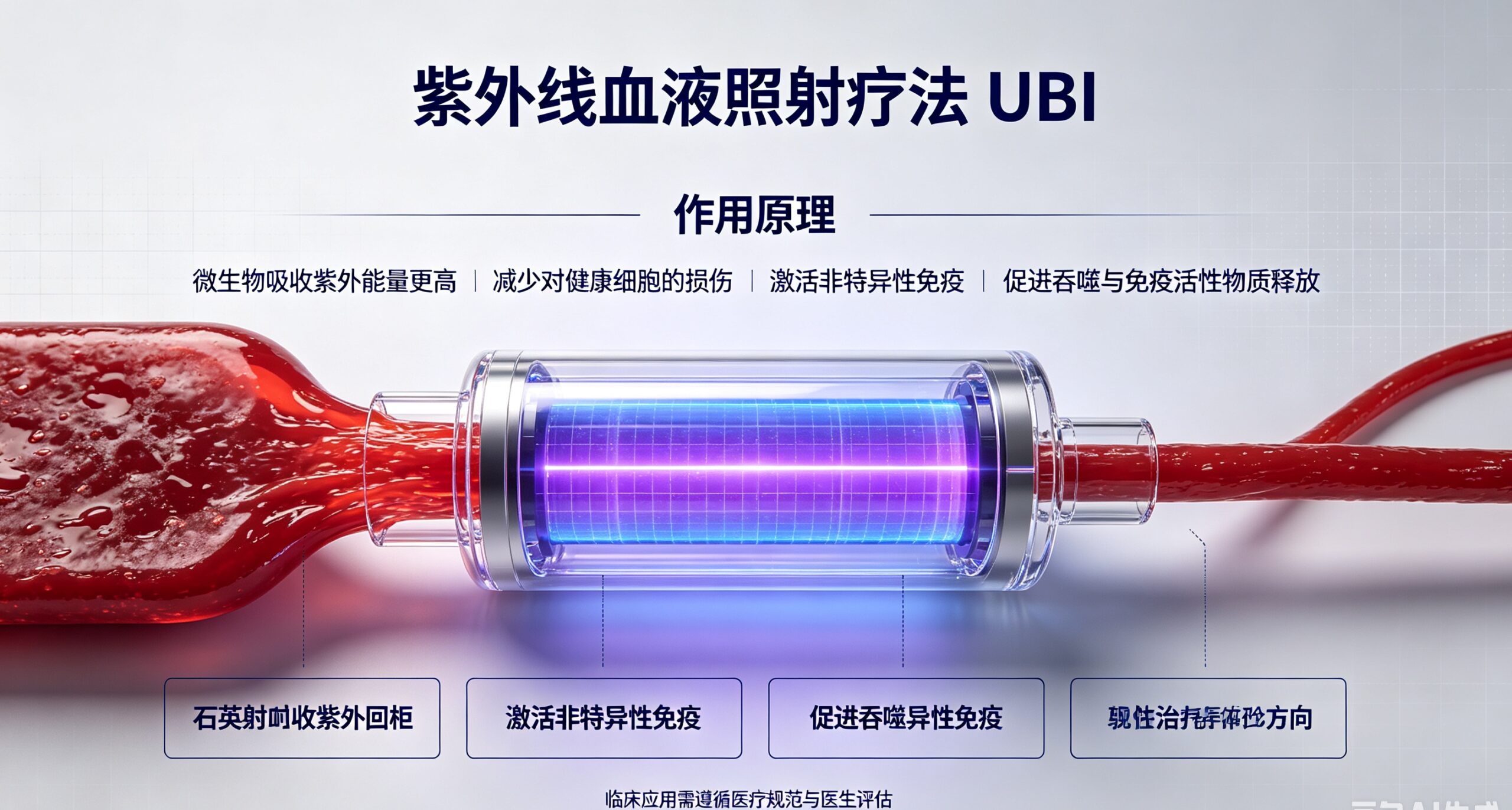
Ultraviolet Blood Irradiation (UBI) is an application of photobiology to intravenous therapy that has been well-known for over a century for its clinical research results. This method refers to physical methods of immunomodulation. The principle of UBI is to take a little quantity of peripheral blood from a patient, irradiate the prepared blood with ultraviolet rays within a closed system, and transfuse the treated blood back into the organism transmitting a series of beneficial influences on the body.
The principles of work of this method are based on the selective photobiological influence. Microbial agents in blood have a much higher absorption of ultraviolet photon energy than human blood cells helping to sterilize the blood without damaging the healthy tissues. On the other hand, UBI also stimulates immunity by activating the non-specific immunity of the organism, and stimulating phagocytosis and production of active substances of immunity. Besides that, it neutralizes the threats from microbes and improves blood circulation.
The method was widely used for the treatment of infectious diseases and inflammatory processes before antibiotics were widely used in medicine. However, today it is becoming interesting again in the field of modern integrative medicine due to the problem with antibiotics resistance. However, today, this method is applied in medical practice for adjuvant therapy of chronic infectious and inflammatory diseases. The application of UBI method is minimally invasive and has no side effects.